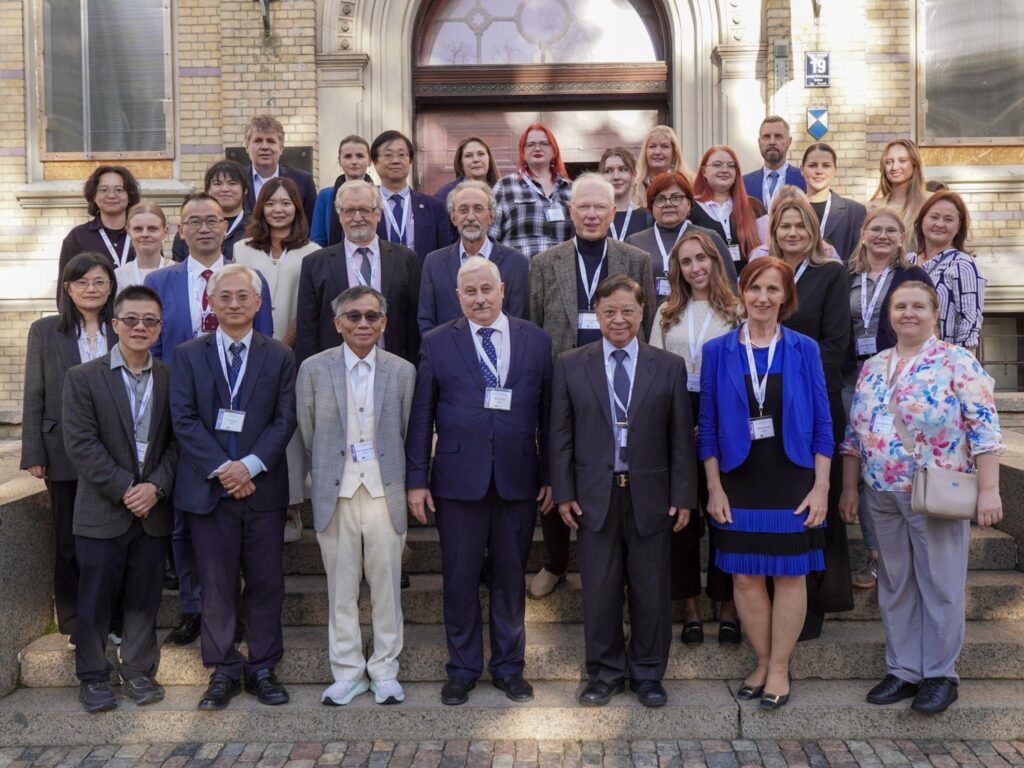
The implementation of lung cancer screening programmes in Europe and Taiwan was a key topic at the European-Taiwan Cancer Screening Conference 2026, held on 7 October at the University of Latvia in Riga. Prof. Dr. Ildikó Horváth, Director of Science and Education at the National Korányi Institute for Pulmonology, chaired the scientific session addressing European and Taiwanese experience in prostate and lung cancer screening.
Organised within the framework of the EUCanScreen Joint Action, the conference brought together experts from Europe and Taiwan to exchange knowledge and practical experience in cancer screening. Discussions focused on quality assurance, personalised and risk-stratified screening, and the implementation of screening programmes included in the European Union’s updated cancer screening recommendations.
 The session chaired by Prof. Dr. Horváth included two presentations specifically addressing lung cancer screening. Dr Torsten Blum from Germany presented the current status of lung cancer screening implementation in Europe, while Dr Aiden Chen-Yang Hsu from Taiwan shared experience from Taiwan’s lung cancer screening programme. The presentations offered valuable insights into different approaches to organised screening and highlighted the importance of international knowledge exchange. Taiwan’s experience provided a particularly interesting perspective on the development and implementation of population-based screening programmes.
Low-dose computed tomography (LDCT) screening has been shown to reduce lung cancer mortality in appropriately selected high-risk populations. Effective screening also depends on evidence-based eligibility criteria, quality assurance, standardised assessment of findings, appropriate diagnostic follow-up and well-coordinated care pathways. Comparing European and Taiwanese experiences offered an opportunity to consider how different healthcare systems address these challenges and translate scientific evidence into screening practice.
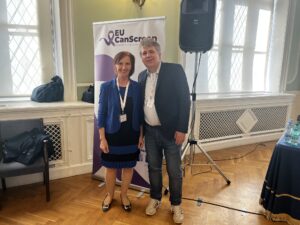 The discussions also highlighted opportunities to connect lung cancer screening with broader respiratory health assessment and prevention. Screening programmes can provide a valuable setting for smoking cessation support and for identifying other respiratory conditions, including previously undiagnosed chronic obstructive pulmonary disease (COPD). Lung function testing can support the early identification of airflow obstruction, while LDCT examinations may reveal signs of emphysema that warrant further clinical assessment. These considerations are also relevant to the priorities of the Joint Action on REspiratory Diseases (JARED), coordinated by the National Korányi Institute for Pulmonology, particularly in relation to prevention and the early detection of chronic respiratory diseases.
Beyond lung cancer screening, the conference addressed colorectal cancer screening quality assurance, personalised and risk-stratified screening, the use of health data and machine learning, and developments in prostate, gastric and liver cancer screening and prevention.
The Riga conference demonstrated the value of exchanging scientific knowledge and practical experience across countries and healthcare systems. The insights shared by European and Taiwanese experts can contribute to the continued development of effective, evidence-based screening programmes and strengthen international cooperation in cancer prevention and early detection.