
Bringing lung screening to rural communities in Poland
In small towns and rural communities across Poland, accessing healthcare can mean long journeys to distant cities – a significant barrier to life-saving tools like lung cancer screening.
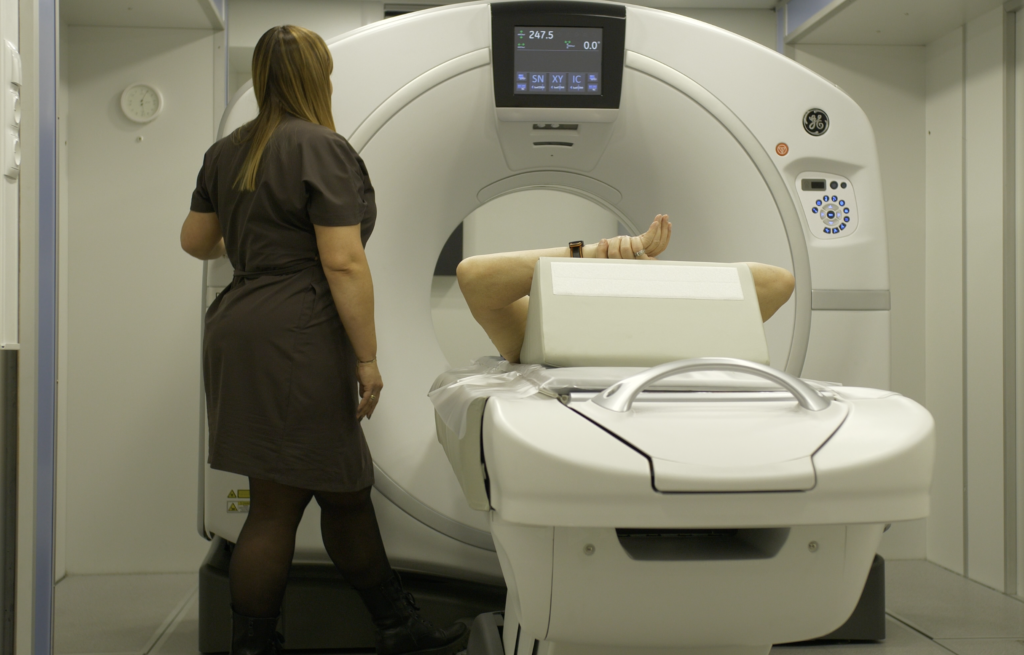
Through a SOLACE pilot project, a mobile low-dose CT unit is travelling across the Lublin Voivodeship region, bringing screening directly to people in smaller towns and rural areas. The mobile CT-truck represents a new approach to closing the healthcare gap between Poland’s urban academic centres and communities that have been harder to reach.
Watch to hear from screening participants in Chełm, along with the nurses, radiographers and SOLACE team making mobile lung cancer screening a reality in Poland. The video features people speaking in both English and Polish.
English subtitles:
Polish subtitles:
Why mobile screening matters in Poland
Lung cancer screening has a long history in Poland, with pilot programmes dating back to the early 2000s. These programmes showed that large-scale screening was feasible but also revealed a significant challenge: screening was predominantly provided by academic centres in larger cities, making it difficult for people in rural areas to attend. Prof. Dr Joanna Chorostowska-Wynimko, SOLACE Scientific Coordinator and Poland lead, alongside a multidisciplinary SOLACE team, has been working to address this gap.
Mobile CT units remove key barriers: distance, travel costs and limited awareness. By bringing the CT scanner directly to local facilities, the programme means that geography no longer determines who can access and benefit from early detection. The results of the first edition of Poland’s mobile-CT pilot project, held in the Lubelskie region, show the impact of this approach. Of the 2,600+ participants screened:
- 15% showed changes requiring further medical evaluation
- 16/22 (72.7%) cases of lung cancer were identified at an early stage
- Additional cancers were also detected, including one lymphoma and two breast cancers
How the programme works
The screening test itself is simple and painless – a low-dose CT scan that takes only a few minutes and uses minimal radiation. By detecting small nodules or abnormalities before symptoms appear, the scan can catch cancer at a stage when treatment is more effective.
The mobile screening programme targets people at higher risk of developing lung cancer. Eligibility varies across countries, but typically includes people who:
- are aged 55 to 74 years;
- have a smoking history of at least 20 pack-years – equivalent to smoking one pack of 20 cigarettes per day for 20 years, two packs per day for 10 years, or half a pack per day for 40 years;
- do not have symptoms of lung cancer; screening is designed for people who feel generally well but have a higher risk because of their smoking history and age.
In Poland, the criteria are broader: the standard eligibility applies to people aged 55 to 74 years with a smoking history of at least 20 pack-years who have smoked within the last 15 years, but the age threshold is lowered to 50 years if additional risk factors are present.
Reaching this group requires collaboration with local healthcare teams and community leaders. Family doctors and lung specialists play a central role in identifying eligible people, informing them about screening, and encouraging them to take part. The Polish also used an AI-supported cloud platform to link GPs, radiologists and the clinical team at the Medical University of Lublin, enabling seamless communication and coordinated follow-up for patients with suspicious findings.
Building toward a national programme
Poland is moving closer to making lung cancer screening available nationwide. The main policy challenge now is getting the Ministry of Health to incorporate mobile screening into their national implementation plans, as they work with the National Health Fund to transition from pilot programmes to a regular, nationally funded screening programme. The broader vision is to evolve from “lung cancer screening” to comprehensive “lung health screening” that also catches conditions like COPD in high-risk demographics.
While a final decision from the Ministry of Health is pending, years of pilot programmes and the SOLACE initiative have laid a strong foundation. Beyond the scans, the programme raises awareness about smoking risks, the value of regular health checks, and how early detection can save lives.
More resources
For health professionals:
For the public and screening participants: