
Bringing lung screening to the heart of the community in Ireland
Ireland is piloting a community-based approach to lung cancer screening and choosing locations that already hold a special place in Irish life.
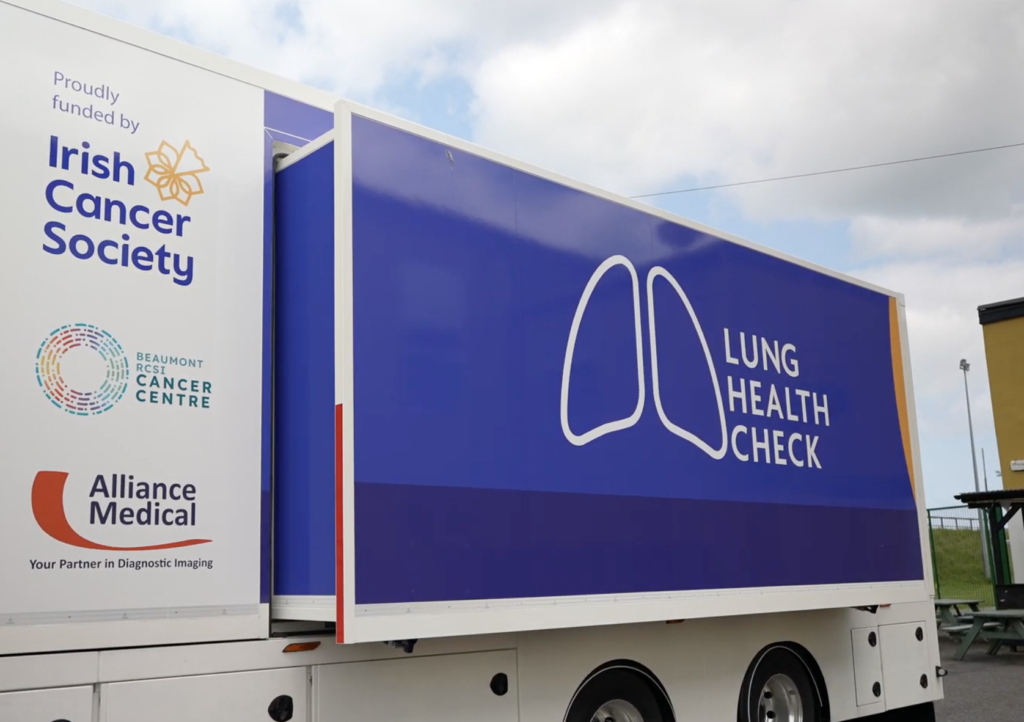
Through the Beaumont RCSI Irish Cancer Society Lung Health Check pilot, mobile CT screening units are being stationed at GAA (Gaelic Athletic Association) clubs across the country, bringing lung health checks directly into familiar, trusted community spaces. The GAA has a presence in virtually every Irish community and for many people, these clubs represent more than sport – they are gathering places, local landmarks and symbols of community identity.
This is the first time in the Republic of Ireland that an entirely community-based approach to lung cancer screening is being tested. Since launching in May 2025, the screening units have operated at GAA clubs from Monday to Friday. The goal of the pilot is to demonstrate that this community model works well and is possible as a standard screening programme in Ireland, alongside BreastCheck and CervicalCheck.
Watch to hear from mobile lung screening participants, as well as the multidisciplinary team behind Beaumont RCSI Irish Cancer Society Lung Health Check pilot:
Building awareness in the community
The Beaumont RCSI Irish Cancer Society Lung Health Check pilot held four community information evenings at GAA clubs across Dublin and Drogheda: Fingallians GAA in Swords, O’Toole’s in Ayrfield, O’Raghallaighs in Drogheda, and Croke Park in Dublin. Each evening drew around 150 people in person, with another 50 joining online through live-streamed presentations and question-and-answer sessions. Participants were invited from specific Centric Health GP practices across the North Dublin and North-East region of Ireland.
For many people, the idea of going to a hospital for a scan can feel intimidating, especially when they have no symptoms and are being invited as part of a preventive screening pilot. Participants consistently describe the community setting as more approachable and less daunting.
Having the screening unit in a local GAA club means people can attend somewhere they are used to going, somewhere easy to reach, and somewhere that feels like part of everyday life, rather than a clinical setting.
How the pilot works
The first step is a telephone questionnaire. This series of questions is designed to understand if the participant would benefit from coming to the mobile unit.
When participants arrive at the mobile unit, they are guided through a streamlined process that includes a full lung health check: a noninvasive respiratory assessment, spirometry, and access to smoking cessation advice. This is followed by a low-dose CT scan – all delivered on-site in the community setting.
Participants receive their first scan at the initial visit, with a follow-up scan scheduled for one year later. Around 12% of participants are also given an additional scan at three months to monitor any findings that need closer observation.
If the scan identifies a finding that suggests possible cancer, participants are referred for further investigation. Approximately 3% of participants are referred, though not all will result in a cancer diagnosis. Other incidental findings are managed through the participant’s family doctor or the appropriate hospital pathway in Beaumont Hospital, Dublin and Our Lady of Lourdes Hospital, Drogheda.
Why this matters
Lung cancer is the leading cause of cancer death among both men and women in Ireland. Early detection through screening has the potential to save lives – but only if people actually access it.
Patient advocacy has been central to shaping the pilot from the outset. One advocate involved in the pilot lost two family members to lung cancer – an experience that became a driving force for creating something that could make a real difference for people at risk.
For participants, the community-based model offers both convenience and peace of mind. Some see it as an opportunity to check on persistent symptoms while contributing to research. Others describe it simply as a chance to look after their health in a way that feels manageable and straightforward.
The Beaumont RCSI team hopes this pilot will provide the evidence needed to support a national rollout of lung cancer screening across Ireland. By meeting people where they are – in places they already know and trust – Ireland is building a foundation for lung cancer screening that could be both effective and sustainable for the long term.
More resources
For health professionals:
For the public and screening participants: