
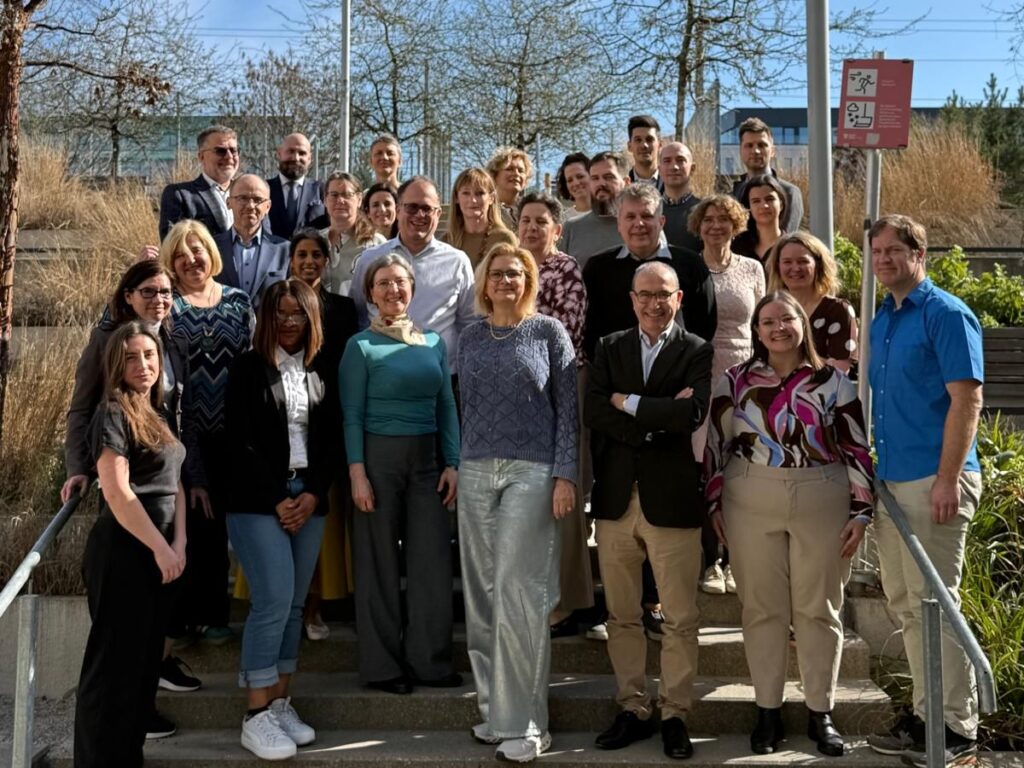
Updates and achievements from the final SOLACE Project consortium meeting
The SOLACE Project consortium held its final all-partner meeting in Vienna on 12 to 13 March 2026, bringing together partners from across Europe to share results, reflect on three years of work and discuss the future of lung cancer screening.
SOLACE — Strengthening the Screening of Lung Cancer in Europe — is a three-year EU4Health-funded project focused on making lung cancer screening more accessible across Europe, particularly for high-risk groups currently underrepresented in screening such as women, people from marginalised communities and those living with a lung condition.
What happened
Over two days, the consortium reviewed findings from all three implementation pilots and discussed what comes next as the project draws to a close in March 2026.
All three pilots exceeded their recruitment targets, with pilot leads presenting their results:
- Pilot 1 in France, led by Prof Marie-Pierre Revel, focused on enhancing women’s participation in lung cancer screening across 14 centres in 10 countries. A key finding was that different recruitment methods reach different populations: community ambassadors and mediators were more effective at engaging less educated groups, while media and breast cancer screening links tended to reach more educated participants.
- Pilot 2 in Hungary, led by Prof Ildikó Horváth, tackled the challenge of reaching hard-to-reach populations, using mobile CT trucks, community mediators and partnerships with local authorities to break down structural barriers. The pilot showed that targeted outreach, combined with practical support such as free transport, can make a difference in reaching communities that would otherwise be missed.
- Pilot 3 in the Czech Republic, led by Prof Martina Koziar Vašáková, focused on people living with higher-risk conditions such as COPD and fibrotic lung disease. The pilot engaged physicians treating these patients across 12 sites and found that targeted outreach had a clear positive impact on recruitment, with higher lung cancer detection rates in these groups than in the general screening population.
Screening participant surveys presented during the meeting showed encouraging results: 92% of respondents reported a positive screening experience, and up to 61% in some countries said participation had changed their health-related behaviour.
The meeting also explored the role of AI in lung cancer screening and heard updates on the SOLACE Knowledge Hub, the Guideline and Implementation Work Package and progress on publications.
What’s next
As SOLACE approaches its conclusion, several initiatives are in place to carry the work forward.
The SOLACE Knowledge Hub (hub.solacelung.eu) will continue to provide freely accessible guidelines, tools and resources for anyone implementing a lung cancer screening programme, as well as for people who want to know whether lung cancer screening is right for them.
The European Lung Cancer Screening Alliance (ELCSA), established by the European Respiratory Society and the European Society of Radiology, will sustain the networks built through the project.
Looking further ahead, the consortium is working towards SOLACE+, a proposed next phase that, if funded, will support more countries in moving from pilots to national programmes and extend the project’s impact across Europe.
SOLACE Co-Scientific Coordinators Dr Anna Kerpel-Fronius and Prof Joanna Chorostowska-Wynimko closed the meeting by thanking partners for three years of committed work. The SOLACE project may be concluding, but its impact on lung cancer screening in Europe is just beginning.
Access the SOLACE Knowledge Hub for information and resources: