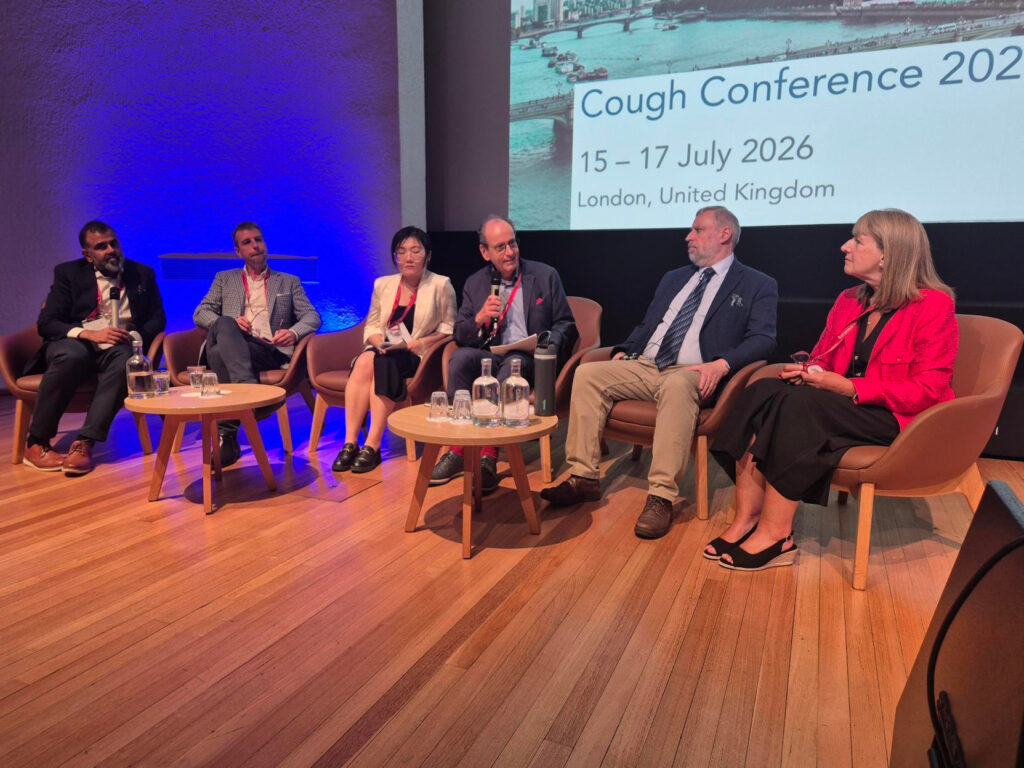
The first ERS Cough Conference brought together researchers, healthcare professionals, industry representatives and patient advocates in London, England, from 15–17 July 2026 to explore the latest in chronic cough research, diagnosis and treatment.
The event, held in London and online, attracted more than 350 delegates from 59 countries, who gathered to review the latest clinical and research advances, evolving ideas and new approaches to the management of chronic cough.
A strong theme throughout the conference was the growing recognition of chronic cough as a condition in its own right, rather than simply a symptom of another disease, reflecting an evolving understanding of the condition among researchers and healthcare professionals.
Patient representatives Ruth Last and Andrew Lothian, both members of the European Lung Foundation (ELF)’s Chronic Cough Patient Advisory Group (PAG), shared their experiences throughout the conference, helping researchers and healthcare professionals better understand the realities of living with chronic cough.
Ahead of the event, Ruth and Andrew shared their hopes for the event and reflected on the importance of patient involvement in ELF’s blog, ERS Cough Conference 2026: bringing the patient voice to chronic cough discussions.
Ruth and Andrew’s contributions at the conference highlighted the far-reaching impact chronic cough can have on daily life, relationships, work and wellbeing. Discussions also recognised the important role played by family members and caregivers.
During informal discussions with healthcare professionals, Andrew’s wife, Lynda, shared her perspective as a caregiver. She spoke about the challenges of helping others understand the condition and highlighted that chronic cough is not always as visible as people might expect, which can sometimes lead to misunderstandings about its impact and severity.
Researchers discussed how understanding of chronic cough continues to evolve.
Several presentations focused on the role of the nervous system and how increased sensitivity to everyday triggers may contribute to persistent coughing. This growing understanding is helping to shape new approaches to treatment and supports the shift towards viewing chronic cough as a disease in its own right.
Speakers also highlighted the need for greater consistency in how chronic cough is defined and measured. Variations in definitions and research methods can make it difficult to compare studies and understand the true burden of the condition.
Improving the way chronic cough is assessed, including through patient-reported outcome measures, was identified as a priority for both clinical care and future research.
One clear message from the conference was that progress is being made not only in understanding the biology of chronic cough, but also in recognising the experiences of people living with the condition.
Discussions highlighted the importance of reducing stigma and improving awareness among healthcare professionals. Patient speakers shared examples of how chronic cough can be misunderstood, reinforcing the need for better education and greater empathy throughout the healthcare journey.
There was also growing interest in ensuring that patients have access to clear, evidence-based information that supports informed decision-making and meaningful involvement in their own care.
The conference also explored the relationship between chronic cough and other respiratory diseases, including bronchiectasis.
Speakers highlighted the importance of airway clearance in bronchiectasis and discussed the role cough can play in helping to clear mucus from the airways. Sessions also explored the challenges of recognising bronchiectasis early and the need for greater awareness to support timely diagnosis and treatment.
The ERS Cough Conference highlighted both the progress being made in chronic cough research and the challenges that remain.
While advances in understanding the biological mechanisms behind chronic cough are opening new possibilities for treatment, speakers repeatedly emphasised that improving outcomes also requires better recognition of the condition, increased awareness among healthcare professionals and continued partnership with patients and caregivers.
For the ELF Chronic Cough PAG, the conference provided an important opportunity to help ensure that future research, treatment and care reflect the priorities of people living with chronic cough.
To learn more about chronic cough, including symptoms, diagnosis and treatment options, visit the ELF Chronic Cough Information Hub.
Our Patient Advisory Groups or PAGs bring together people with an interest in a particular lung condition or topic related to lung health. If you are interested in joining a PAG or would like further information, please get in touch at info@europeanlung.org.