This month, we spoke with Lucy Dixon, Chief Executive of PCD Support UK and a long-time patient advocate living with primary ciliary dyskinesia (PCD). Lucy reflects on her journey from patient to leader and explores how organisations including the European Lung Foundation (ELF), the European Respiratory Society (ERS) and BEAT-PCD are helping ensure that people […]
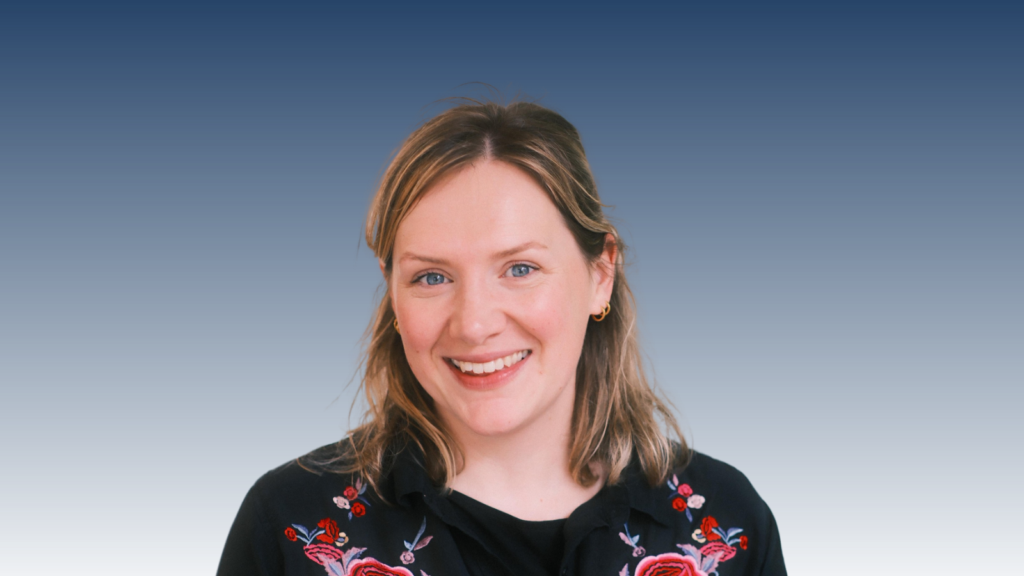
I am the Chief Executive of PCD Support UK. I volunteered with the charity from 2010, became Chair of Trustees in 2020 and in 2026, I was delighted to be appointed in the charity’s first paid role. It is a dream job that I fit around living with PCD and being the mum to a busy child.
I was diagnosed with PCD when I was four years old, so I have never really known any different. But for me, it has gradually become harder to manage as I have become older: particularly recurring lung, sinus and ear infections.
At my worst, I spent 8 weeks a year in hospital for intravenous antibiotics. Nowadays, I have a fantastic team and I can often manage courses of intravenous (IV) antibiotics from home if I need them.
Despite living with PCD for over 34 years, it still has a way of surprising me. I found the transition from childhood into adulthood really challenging in terms of keeping up with daily airway clearance treatments (techniques used to help clear mucus from the lungs).
After a long period of fertility struggles, I was so delighted to have my son in 2024, however, nothing prepared me for juggling motherhood with PCD. Even being close to, what feels like the epicentre of PCD (e.g. knowing so many of the families, the researchers and the doctors), I had no idea what to expect once my baby was born. It’s been a steep learning curve juggling my health around family, and one I’m not sure I’ve mastered yet.
I wish more people understood that managing PCD is not ‘just’ doing airway clearance treatments twice daily, nebulisers (which help deliver medication directly to the lungs), sinus rinses and taking antibiotics. It is also the toll of organising multiple hospital appointments, rearranging social commitments due to illness, having to decide how upfront to be about PCD in professional settings, and so much more. I also wish people could better understand the impact PCD has on those around us. I have an amazingly supportive family and partner, but PCD can be scary sometimes. Watching those you love, whether it is a child or a partner, go through constant ups and downs of chronic illness takes its toll and I think people often forget about the support partners, siblings and parents need.
From a young age, my mum would encourage me to participate in paediatric doctor exams. I loved it because I would get a toy voucher if I didn’t tell the students that my heart is on the opposite side (dextrocardia)!
I stopped doing these in my early teens and then didn’t get back into patient advocacy until I was in my early twenties. I had just had a major operation to remove a lobe of my lung due to severe bronchiectasis and collapse of part of that lung, and I was feeling really lost and isolated. I reached out to the then-Chair of PCD UK, Fiona Copeland, who brought me along to committee meetings. From there, I really got an appetite for research and patient advocacy. It has given me such a positive experience of a disease that I can find pretty annoying on a daily basis! I am also inherently nosy, so I enjoy getting to hear about and have a say in the latest studies into PCD.
I am a member of the BEAT-PCD Clinical Research Collaboration (CRC) Management Committee and part of some of the working groups. This CRC has been transformative and has brought together an incredibly robust and dynamic community of PCD professionals and patients. Working with BEAT-PCD has given me all kinds of opportunities: I have spoken at conferences, reviewed clinical trial protocols from a patient perspective, and have co-authored a number of papers, including the ERS-ATS Joint Diagnostic Guideline on PCD.
Personally, these experiences have catalysed my career. I worked in education until 2019, before retraining as a social researcher, focusing on health research and in particular, participatory research methods. I then worked in the NHS for four years as a Strategic Lead for Research, before landing my new role at PCD Support UK. I owe a large part of this personal development to the repeated exposure I got to research. It gave me the hands-on experience (both in terms of breadth and depth) that I don’t think I could have gained otherwise, particularly with my fluctuating health.
There is a phrase often used in medical settings in the UK that says, ‘nothing about us, without us’. PCD is a rare condition and the number of people affected is relatively small, so to think that researchers might be determining questions that they think are relevant to us, without working with us from the beginning is deeply unethical. Luckily this doesn’t happen very often and there are some great examples of research that actively involves people living with PCD, like the Living with PCD Study. You can find out more about it here: https://pcd.ispm.ch/en/.
I am genuinely honoured to represent the PCD community. I am really looking forward to launching a Patient Advisory Panel soon through PCD Support UK, which has been made possible thanks to an anonymous donation. This has been a personal goal of mine for a while: to support more people affected by PCD to feel confident to share their stories and get involved in shaping the narrative.
If I didn’t have PCD, I know my life would be totally different. However, maybe not for the better in many ways! Getting involved in advocacy has given me a real drive and purpose. I have my own experience of PCD, but it is one of thousands. I try to make a point of saying that my experience is not necessarily representative of others. However, if there is one thing that I can say or do that makes someone’s experience of PCD more positive then that makes everything worth it. This might sound a little unusual, but I wake up every day and go to bed every night thinking about the PCD community: the struggling and juggling families, the PCD adults who are absolutely thriving in brilliant professions whilst managing their care, the potential clinical trials which are so close yet so far, and the desperate hope that I think we all share for a cure.
I think we need to get better at supporting people in different languages! If we want to include people with lived experience globally, then we need to improve how we support them to access the same information fairly. I also feel passionately that we need to pay people for their time, as much as possible. I have a hypothesis that most people with PCD or their caregivers are financially worse off than someone without a chronic illness of this type, and I think the research community has a responsibility to not exacerbating these inequalities. For me it’s simple: if you are making a grant application for PCD, you should be costing in the time and expenses of your lived experience experts, as you would your scientific colleagues.
You do not need to know anything about research for most of these opportunities and you might be surprised by how interested researchers are in your experiences. Many of the researchers I have worked with have not had the opportunity to ask questions about what it’s like to live with PCD, and they are often grateful when I share my experience candidly.
When considering whether to get involved in a research or advocacy opportunity, I would think about asking questions like these: