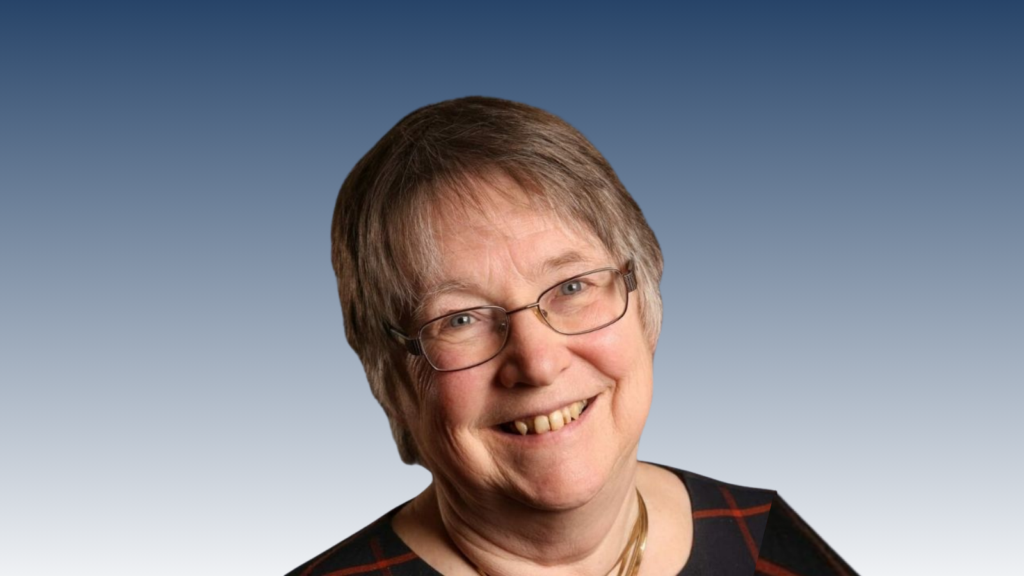
This month, we spoke with Professor Hilary Pinnock, Chair of the ERS Education Council and Professor of Primary Care Respiratory Medicine at the University of Edinburgh. She shares more about her work and why we all have a vital role to play in shaping the future of healthcare.
I am a family doctor by background with a longstanding interest in how healthcare is provided for people with lung conditions, especially the common conditions of asthma and chronic obstructive pulmonary disease (COPD). Now, as Professor of Primary Care Respiratory Medicine at the University of Edinburgh, I have developed expertise in health service research and implementation science, working with colleagues not only in the UK but across the world. There is still much to do to ensure effective treatments and management strategies are adapted to different social, economic and healthcare contexts globally.
As Chair of the ERS Education Council, I provide leadership for training and educational initiatives for global ERS members, a third of whom are from countries outside Europe. Three important influences on the decisions of the Education Council are the expertise of ERS specialist assemblies, ERS strategic priorities and my belief that education should support the implementation of effective care in everyday practice.
I strongly believe that education is not just about sharing knowledge. It is about supporting colleagues to adapt effective interventions so they can be embedded into routine care in their own settings.
There is no single answer to this important question. We work closely with ERS assemblies, early career members and patient partners to identify learning needs and priorities.
Updates on common conditions are always in demand, but our curriculum also ensures that we do not overlook rare conditions or uncommon skills.
We provide education in a range of formats, including programmes, panel discussions, webinars, podcasts, online learning and face-to-face training.
One of the most important things I have learnt, both as a doctor and as a researcher, is that working together is essential if we want to make a real difference. This applies whether a patient and their healthcare professional are discussing an approach to individual care, co-designing new models of healthcare, conducting meaningful research or advocating for policies that promote respiratory health.
Our voices are stronger when we listen to each other, discuss different perspectives, identify shared priorities and work towards a common goal. This echoes ERS’s commitment to strengthen patient involvement and co-design across all its activities, whilst ensuring that patient voices and ELF partnership are visible at every level of ERS.
I find that the patient viewpoint often changes the focus of discussion. It does not replace the professional perspective, but insights from people with lived experience are often noticed by several speakers. Sometimes, when I am chairing a symposium, I find that the patient perspective is the one that helps unite the messages from the speakers the most.
There are so many. I am particularly looking forward to some of the sessions that tackle challenges which are all too relevant in today’s world, including “War as a threat to respiratory care: from crisis to preparedness” and “Delivering net-zero health care” on Tuesday 8 September. “The power of patient partnerships” on Monday 7 September is another major symposium which covers many of the topics relevant to the Congress theme.
My interest in patient-professional partnership began more than 35 years ago, when the first asthma guidelines recommended that people with asthma should have ‘action plans’ that summarised agreed strategies for keeping asthma under good control and what to do if symptoms recurred. This made perfect sense to me. People with asthma should understand their condition and be involved in decisions about their care, including knowing what to do if their symptoms or level of control changed.
As a researcher, I have been leading a UK-wide trial exploring how we can support practices to embed supported self-management in routine clinical care. I am looking forward to sharing the results of our study, “Supporting self-management for adults with asthma in UK general practice”, at Congress on Sunday 6 September.
My top tips are:
“United for better breathing” is not just a slogan. Partnership working changes how we understand problems, strengthens the solutions we develop together, and amplifies our collective voice as we advocate for changes that improve respiratory health around the world.