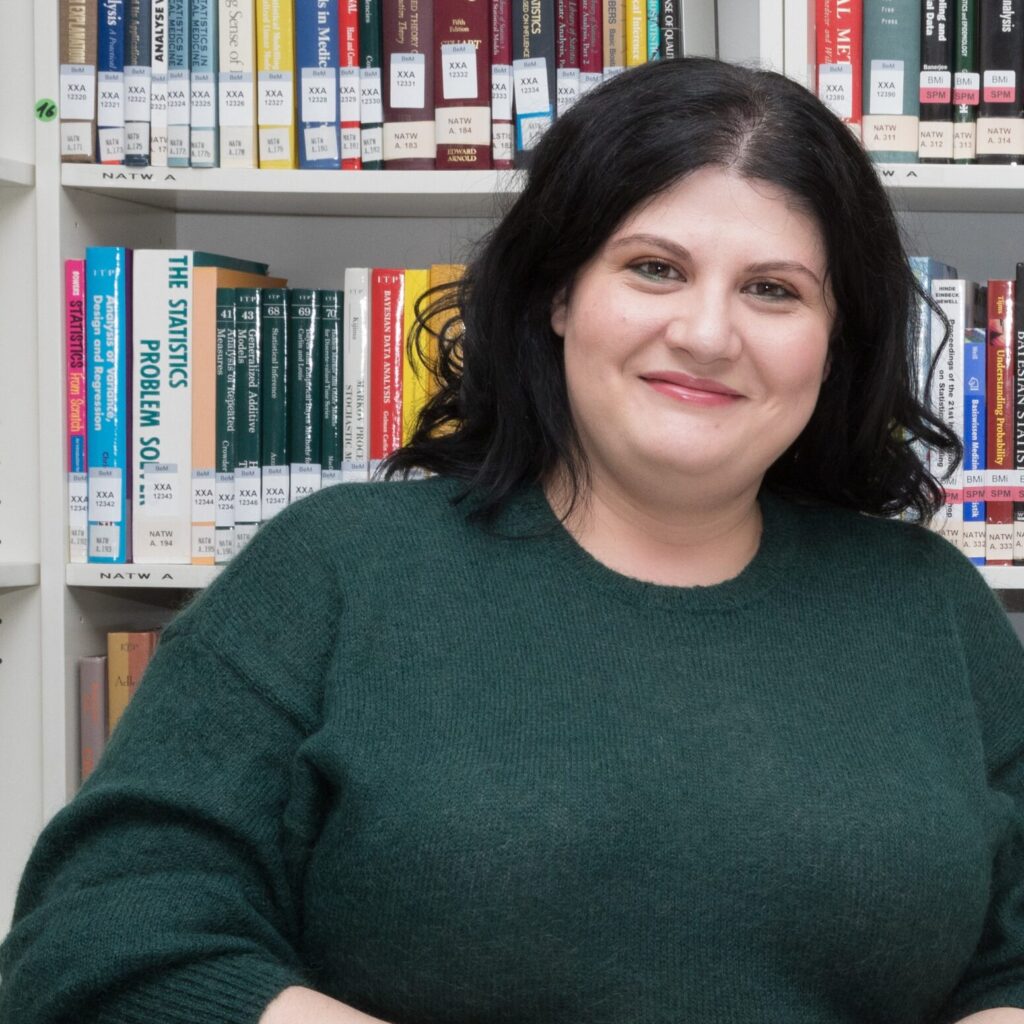
This month, we spoke with Myrona Goutaki, co-leader of the BEAT-PCD clinical research collaboration (CRC). Ahead of Rare Diseases Day on 28 February, Myrona emphasises the value of including patient voices in research into rare conditions such as primary ciliary dyskinesia (PCD) and calls for more accessible, patient-friendly resources.
My name is Myrona Goutaki and I am a clinical epidemiologist based at the Institute of Social and Preventive Medicine at the University of Bern, in Switzerland. I am originally from Greece, where I studied medicine and worked in paediatrics, but since 2012 I have worked fully in research. My focus has been on paediatric and rare respiratory conditions, particularly primary ciliary dyskinesia (PCD). Since 2020, I have co-led the BEAT-PCD clinical research collaboration, together with Amelia Shoemark.
BEAT-PCD is a Europe-led international network of clinicians from across disease areas, multidisciplinary clinicians, researchers, healthcare professionals and patient partners interested in PCD. The network is a Clinical Research Collaboration (CRC), first funded in 2020 by the European Respiratory Society, which was later renewed in 2023.
The network’s vision is that children with PCD born anywhere will receive an early, accurate diagnosis and evidence-based therapies, which will prevent development of bronchiectasis and will reduce morbidity and mortality later in life. You can find more information about who we are and our activities and engage with us on our website.
BEAT-PCD has built upon the foundations set by previous collaborative initiatives in the field, including the close collaboration with PCD support groups worldwide. We wanted to make such collaborations even stronger and more meaningful by making people with PCD and their families central to all our activities.
Our vision also aligns with the aims of ELF. The support we have received from ELF over the years brought us closer to people with PCD worldwide and allowed us to set up a patient advisory group worked with us in all of our activities, including initiatives led by our work package on patient engagement activities, chaired by Jobst Roehmel together with several other clinicians, researchers and patient co-chairs.
This type of resource is greatly needed. Although country-specific PCD support groups are doing extensive work worldwide, many people with PCD still do not have access to accurate, clear, and accessible information about diagnosis, disease management, and how it affects daily life.
We were please to help develop this resource and hope the new ELF PCD page will help address this gap, providing informative material and resources that can be translated into several languages.
The project was originally named COVID-PCD and started in 2020 when PCD support groups asked for a study that focused on the experience of people with PCD during the COVID-19 pandemic. It is an international project and participation is fully online.
Since it launched, more than 700 people have participated. What makes it special is that it has been truly patient-led since the beginning, with patient representatives forming an advisory board and guiding all aspects of the project from study design and research questions to the interpretation and dissemination of results.
After the pandemic, with the ongoing support of the patient advisory board and study participants, the project was renamed Living with PCD and its aims expanded to explore additional important topics, including lung health, mental health, and treatment burden. The study is hosted by the University of Bern and led by Claudia Kuehni and myself. We have recently relaunched the study, inviting new participants to complete the questionnaires in any of five languages:
Participants are encouraged to suggest topics and all results are available on our website in simple and understandable language.
Living with PCD is a real example of how BEAT-PCD envisions working together with people with lived experience and it has completely changed the way I personally collaborate with patient partners for all projects: research with people living with PCD, not about them.
The PCD patient conference is one of our biggest achievements. We started with open meetings advertised on our website, inviting interested people with PCD to join and learn more about our activities and engage with us. With time, we saw an important need for an organised conference, that provides useful information for everyone, from newly diagnosed people to people actively involved through their local support groups.
We held the first online conference in 2022 and have co-organised and co-developed the event with the PCD patient advisory group and support groups worldwide from the start. The support from ELF has helped us facilitate this engagement. Patients select the topics, co-chair the sessions and lead panel discussions. As clinicians and researchers in the field, we support this effort, provide resources to allow the conference to happen and are there to provide clear information, answer questions and engage with patients and families. It is their conference. The exchange and experiences shared during the conferences have been so valuable to all of us. All our conferences are recorded and available on our website.
We will host another conference in 2026 and hope to invite more people with PCD to get involved.
It is sometimes easy to let one’s scientific curiosity and interests guide their research endeavours. It is not really wrong, but I feel in rare diseases we do not have the luxury to do this. There are still so many things we do not understand about PCD and that we need to explore, and so few resources.
I never felt that the research community should talk on behalf of people who live with PCD. What is important for them needs to be at the forefront of research and guide what we do. For me, this is the only way to feel that my research is meaningful and that is why I have prioritised unmet needs in the field of PCD over the years. This has ranged from research related to the upper airways, to mental and social functioning of people with PCD and those around them.
We also recently published a study about research involvement and priorities for PCD from the perspective of people with PCD and their families. This has set a roadmap for us and informed all BEAT-PCD plans and activities.
Rare Disease Day is an excellent opportunity for everyone to understand that millions of people in Europe live with a rare disease. Although few people live with a specific rare disease, together they are many and they deserve the same care and attention common conditions get.
In my role as the scientific coordinator of the Swiss Rare Disease Registry, in addition to my work on PCD, I feel strongly about the symbolism of this day. Increasing awareness in absolutely necessary. It will help people with PCD to be referred and diagnosed quickly and get the specialised care and support they need.
Every day should be rare disease day. We should never stop fighting for more visibility for rare diseases.
Our current period with BEAT-PCD will soon come to an end and so we are now developing our main aims and targets for the next years. We want more voices to be heard and included. This includes colleagues from more disciplines, from more countries, as well as more people with PCD who have questions and concerns and would like to be engaged in research. Looking back on the past 6 years, we have achieved so much but there is still so much we need and want to do.
We all look forward to what the future will bring relating to molecular treatments. In the short-term, what I am personally most excited about, is a study we are planning for later this year within Living with PCD, about how pregnancy affects the physical and mental health of women with PCD. So many women and families wonder about this and we know so little. I hope working together with patient partners will help us understand a bit more about a topic that is considered under researched.
Your opinion is important and we want you involved. You do not need to be a representative of a national support group or to know a lot about research to get engaged with what we do. We encourage everyone worldwide who has an interest in PCD to reach out. Send us an email and let’s discuss how to best get involved: beatpcd@ersnet.org.