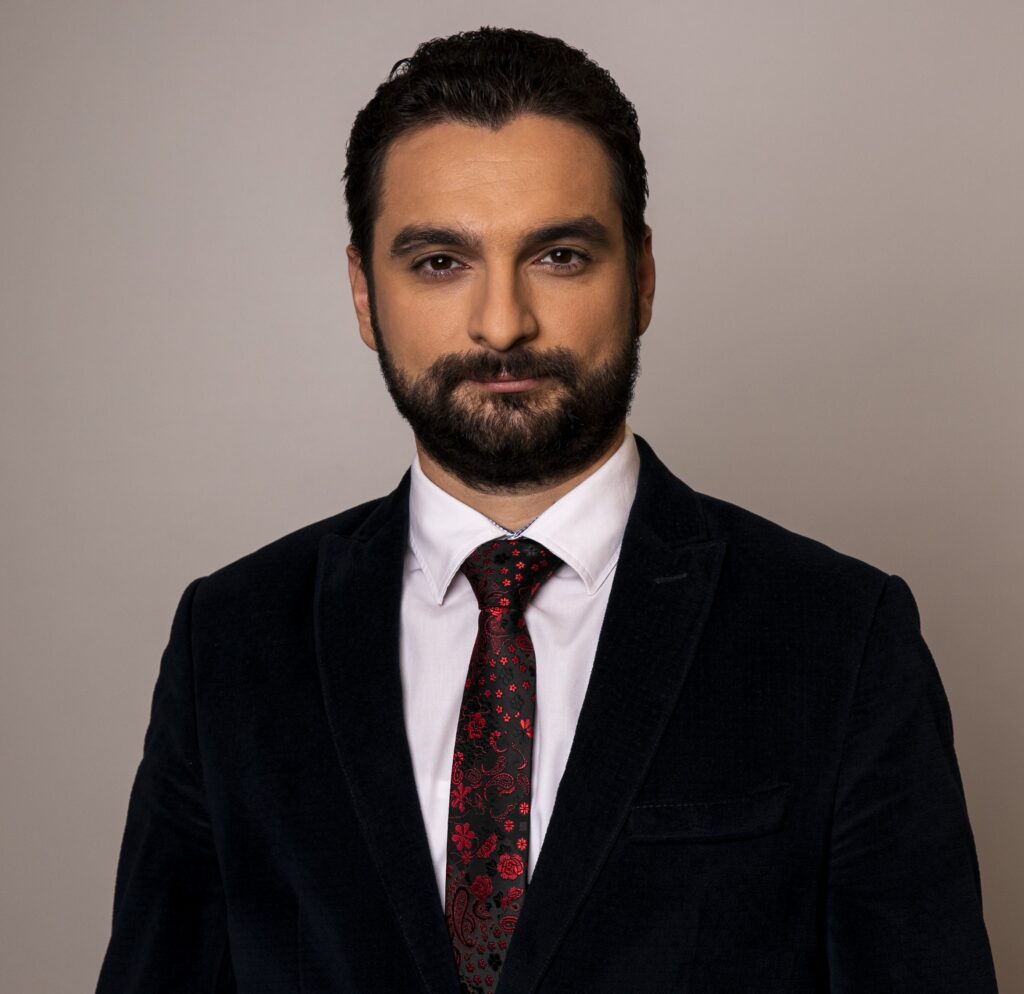
Ahead of World TB Day, we spoke to Stefan Radut. Stefan has lived with TB and now works as Board member of the TB Europe Coalition TBEC, and Director of Association for Supporting MDR-TB Patients (ASPTMR). He talks about his condition, his journey in advocacy and support for the wider TB community.
My name is Stefan and in June 2011, I was diagnosed with TB, for the first time in my life. After two months, I received a diagnosis of MDR-TB. During this time, faster diagnosis methods were not available in Romania. I was infected with a multi-drug-resistant tuberculosis bacillus. I was 25 years old, I had a small business and I was a very active person from the middle class. It was the worst period of my life.
I started a treatment that meant taking 18 pills and an injection every day. I stayed for 5 months in hospital. I quickly understood that I needed to take the treatment for 2 years and I had only a 20% chance of healing. I got depression and I was thinking about what it would be like when I died. The side effects of the medicine were horrible. I usually stayed in bed for at least 2 hours after taking them. I spent a lot of days in bed. My life stopped. I lost my job and I became helpless.
During the treatment, I also experienced hearing loss. This was another low period and another reason to need psychological support. It took me a year to accept I needed to wear hearing aids. I later had to have surgery to remove half of my lung. My liver was also affected during this time and I required further hospital stays.
In June 2013, I was cured and I looked back: I lost 2 years of my life, I lost my job, I lost some friends, I lost a half of my left lung and I lost a half of my hearing. I was 27 years old then. All of this because I had a drug-resistant form of TB.
I met the association when I was undergoing treatment, it was founded around the time I was diagnosed with MDR-TB.
During treatment, sometimes there was a question about whether there was enough money for the medication I needed. I was terrified that the medication would not be affordable. I also had no access to emotional support services. I knew this wasn’t right and I knew something had to be done.
I decided to get involved in a patient association, first by participating in a support group to help me cope with the situation, then I became an advocate for patients’ rights and I have remained active today, 15 years after I was diagnosed. I have served as a Development Director and I have been the General Director for the last 5 years. I still maintain the basic activities of peer support for other patients and information campaigns.
At the moment, all patient organisations at the European level are left without operational funding from the European Commission. In particular for TB at the local level – they have cut most of the funds for patient support. For example, in Romania we were offering the peer support service within the European-funded project for TB screening 2018-2023. In 2024, when the new screening project started, the funding for the peer support service was eliminated without being replaced. Patients were left without any form of emotional support.
Then there are problems related with access to treatment for resistant forms of the condition. Western Europe is facing a lack of approval for drugs, while Eastern Europe is facing the lack of money to purchase drugs. All of Europe is facing the high challenge of migration, where people who were on treatment for TB and resistant TB have left their home country, which can result in the spread of the condition.
To eradicate TB we need a strong commitment, both at the country level, but more precisely at the level of decision-makers in each country and at the European Union level. We need the commitment to be put into practice, not just in words. And we need individual involvement:
Each of us needs to do our part.
All over the world, TB patients face stigma and discrimination. Barriers related to stigma are strong all over the world but it seems that they are slowly starting to be removed just in the last 10 years. This is because of the involvement of civil society and TB survivors in the information and awareness raising campaigns.
In Romania, we are faced with the lack of access to support services for patients. They do not even have access to a psychologist.
There are also problems related to the financing of the Tuberculosis Control Program, such as the financing of MDR-TB treatment and the lack of prevention measures due to the lack of funding.
In the last 15 years, I have noticed significant improvements.
In the area of prevention, there was a screening programme at the European level, which I believe should be continued. Screening continued in Romania and now we are already at the second screening project here.
In the area of diagnosis, rapid diagnostic methods have appeared, now we can have a result in 2 hours versus 3-9 months.
In the area of treatment, new drugs have been developed that make it possible to cure resistant forms of TB in 6 months instead of 2-3 years and without significant adverse effects. Until these new drugs, most patients remained deaf after treatment. New approaches to treatment have been implemented, such as taking away the requirement to stay in hospital long-term, which removed the person from the social circuit. Forms of support have appeared, such as peer support, which worked well. Unfortunately in Romania, there was no money for this.
My message for patients: TB is curable! Trust yourself and your treatment, take all your medications as your doctor tells you. Ask for help if you feel like you are struggling!
My message for healthcare professionals: thank you for all your support!
My message for everyone: if you know someone has TB and they are no longer in the hospital, that person cannot make you sick. After 2-3 weeks of treatment, the patient is no longer contagious.
My message for decision-makers: only by working together, can we stop TB! Please provide the right funding for this!
We can all join the STOP TB Partnership campaign, Yes! We Can End TB. Led by countries, powered by people. We can share the correct message on social media, we can apply frames with campaign messages to our photos and most importantly, we can think about how we would treat someone we knew had TB. If we think that we would stigmatise that person, then we should think about how we treat them next time.