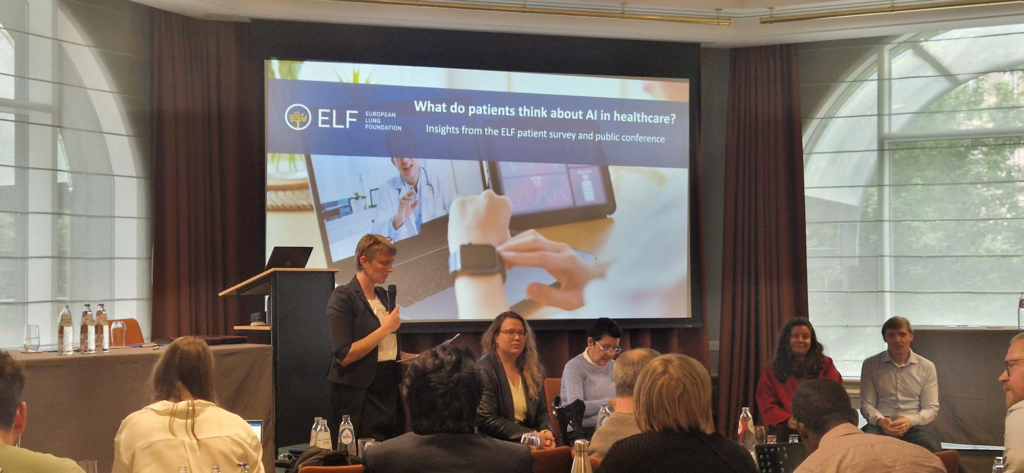
Representatives from the OPTIMA Public/Patient Advisory Board (PPAB) attended the OPTIMA Annual Meeting in Brussels (19–20 May 2026). They led discussions on how artificial intelligence (AI) can support cancer care and highlighted the need for continued patient involvement so these tools are accessible and aligned with patient needs.
At the OPTIMA Annual Meeting in Brussels on 19–20 May 2026, representatives from the Public/Patient Advisory Board (PPAB) contributed patient perspectives to ongoing discussions about the future of artificial intelligence (AI) in cancer care.
The meeting brought together partners from across the OPTIMA consortium to share updates on the project’s progress and explore how AI-driven technologies could support more personalised treatment approaches for people living with lung, breast and prostate cancer.
Patient representatives played an active role throughout the meeting, contributing to discussions on how AI tools can better reflect patient experiences and priorities. Within OPTIMA, the PPAB helps ensure that patient perspectives are represented across the project’s activities, communications and tool development.
A key moment of the meeting was a dedicated PPAB session titled “From data to decisions: patient perspectives on AI in cancer care.” The session explored how AI is beginning to shape different stages of cancer care, from diagnosis to treatment, and what patients need to feel informed and confident in decisions about its use.
Presentations during the session shared insights from an ELF patient survey on digital and AI tools in healthcare, as well as a public conference on human-centric digital AI-enabled solutions for health and workshop focused on AI in healthcare. Together, these highlighted the importance of trust, transparency and accessible communication when discussing AI with patients, as well as the continued need for human oversight in AI-supported care.
The session also featured a panel discussion with patient representatives, researchers and healthcare professionals, including Ximena Montano, member of the PPAB and representative of Europa Donna. When asked about the session and key takeaways, she said:
“It was clear that patients do favour the use of AI but in conjunction with members of the medical profession.
“It was deemed important that conversations regarding treatment options and decisions should be made with participation of the specialised professional, such as an oncologist and AI.
“Patients are excited about the prospect of AI in cancer care as it will also provide information in real time, for example, of results from clinical studies and the introduction of novel and personalised therapies.”
Questions from both the Chairs and audience explored topics including:
Discussions throughout the session reflected growing interest in how AI could improve personalised care and support clinical decision-making, while also reinforcing the importance of ensuring these technologies are safe, understandable and designed with patients’ needs in mind.
As AI becomes more widely used in healthcare, active patient involvement and co-creation will remain essential to ensuring these technologies are trusted, understandable and effective.
Reflecting on her time at the annual meeting, Ximena said:
“Overall, the OPTIMA Consortium AGM demonstrated the significant advances regarding as to the creation of a platform designed for the participation of cancer patients, their clinical teams and AI to enhance their health care, and for the undertaking of research into breast, prostate and lung cancer.”
The OPTIMA project is an EU-funded initiative focused on improving care for people living with lung, breast and prostate cancer through AI-driven technologies and personalised medicine approaches.