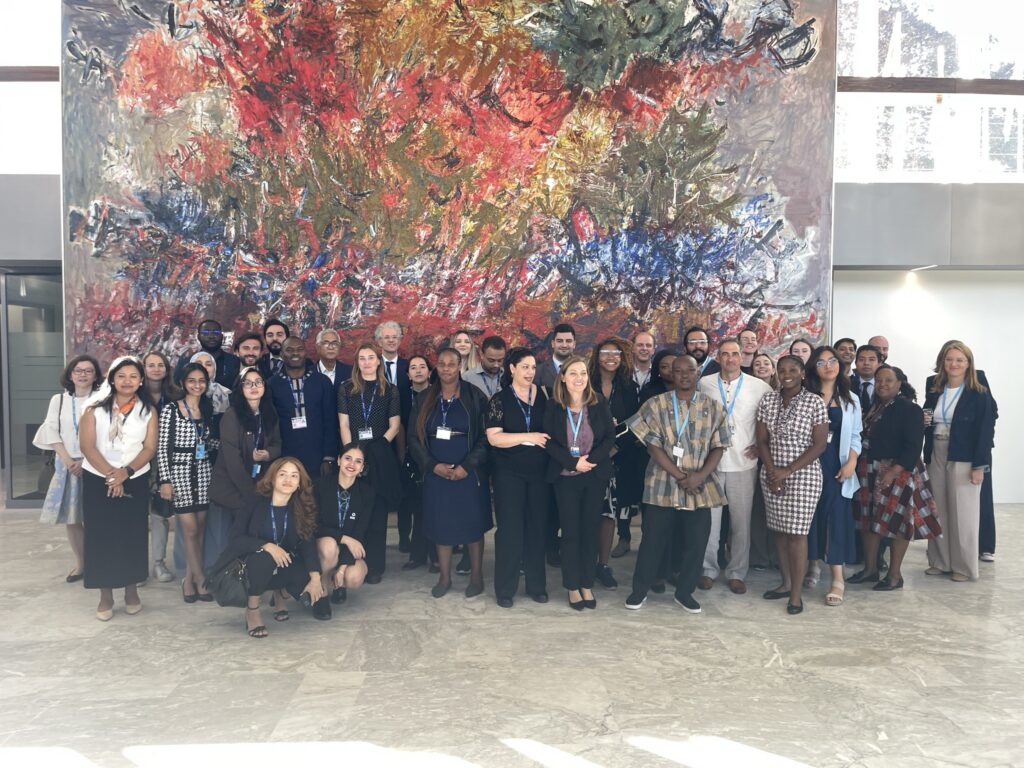
Former ELF Chair, Kjeld Hansen, attended the 79th World Health Assembly (WHA79) in Geneva, joining discussions on lung health and the importance of clean air.
Last week, the World Health Organization’s (WHO) World Health Assembly (WHA79) took place in Geneva, Switzerland, bringing together governments and global health partners to agree on priorities for health systems and international cooperation. While the meeting covered many health topics, the discussions directly affect people living with lung conditions as they help shape future decisions about healthcare services globally.
A side event, ‘From Global Commitments to Integrated Lung Health Action: Advancing early diagnosis of lung cancer and access to inhaled medicines for COPD and asthma’ was hosted by representatives from Malaysia, alongside the International Union Against Tuberculosis and Lung Disease, the Union for International Cancer Control and the Forum of International Respiratory Societies, with participation from representatives from Kenya, Philippines and Brazil. The discussion focused on how countries can make lung care more accessible and integrated with other services so that people can be diagnosed earlier and receive the medicines and support they need.
Speakers highlighted two major challenges affecting people living with lung conditions around the world:
Getting diagnosed early can make a major difference to treatment options and outcomes. Access to inhalers is also essential for helping people manage symptoms and avoid hospital admissions.
The discussion also linked to ongoing efforts to implement the WHO Lung Health Resolution, which aims to commit member countries to strengthening lung health policies and services within their healthcare systems.
People spend most of their time indoors, meaning the air quality in homes, schools, workplaces and public buildings can directly affect health and wellbeing. Poor indoor air quality can worsen symptoms for people living with asthma, COPD and other lung conditions, while long-term exposure to air pollution increases the risk of developing lung disease.
WHA79 sessions on air quality highlighted growing international support for stronger action on clean air, including proposals for a future WHO Resolution on Healthy Indoor Air. Speakers also highlighted how investment in cleaner air could reduce pressure on health systems, prevent disease and improve quality of life.
According to figures shared during the discussions, almost everyone globally is exposed to polluted air, which remains linked to millions of premature deaths each year. For people living with lung conditions, action on clean air is not only an environmental issue but also an important part of protecting lung health and preventing symptoms from becoming worse.
Alongside attending side-events and meetings, Kjeld also took part in discussions with WHO leadership and civil society representatives through his role on the WHO Civil Society Commission.
Patient organisations and people with lived experience play an important role at meetings like WHA79 by helping ensure healthcare decisions reflect the real experiences and needs of people living with lung conditions.
During WHA79, ELF also joined other civil society organisations in supporting a joint statement on sustainable healthcare funding, coordinated through the WHO Civil Society Commission. The statement called for governments and international partners to protect investment in essential health services at a time when funding is under pressure in many countries. It highlighted the importance of prioritising primary and community-based care, so people can access diagnosis, treatment and medicines closer to where they live.
It also called for stronger involvement of patients and civil society in decisions about how healthcare systems are funded and organised, so that the needs and experiences of people living with long-term conditions are reflected in national planning and policy.
Find out more: https://www.who.int/about/governance/world-health-assembly/seventy-ninth
Discussions at WHA79 will continue to influence global work on lung health in the years ahead, including efforts to improve access to diagnosis and treatment, strengthen respiratory care services and support action on clean air.
ELF will continue working with international partners to ensure the voices of people living with lung conditions are represented in global health discussions.