
Our core content on Lung conditions and related factsheets has been translated to a number of other languages.
For more languages explore all available Factsheet translations.
Volunteer as a translator or learn how to translate using Chrome, Firefox or Edge browsers.
 European Lung Foundation


Our core content on Lung conditions and related factsheets has been translated to a number of other languages by our volunteer team.
For more languages explore all available Factsheet translations.
Volunteer as a translator or learn how to translate using Chrome, Firefox or Edge browsers.
Home » New study suggests people often expect breathlessness to be worse than it is
A summary of research published in European Respiratory Journal
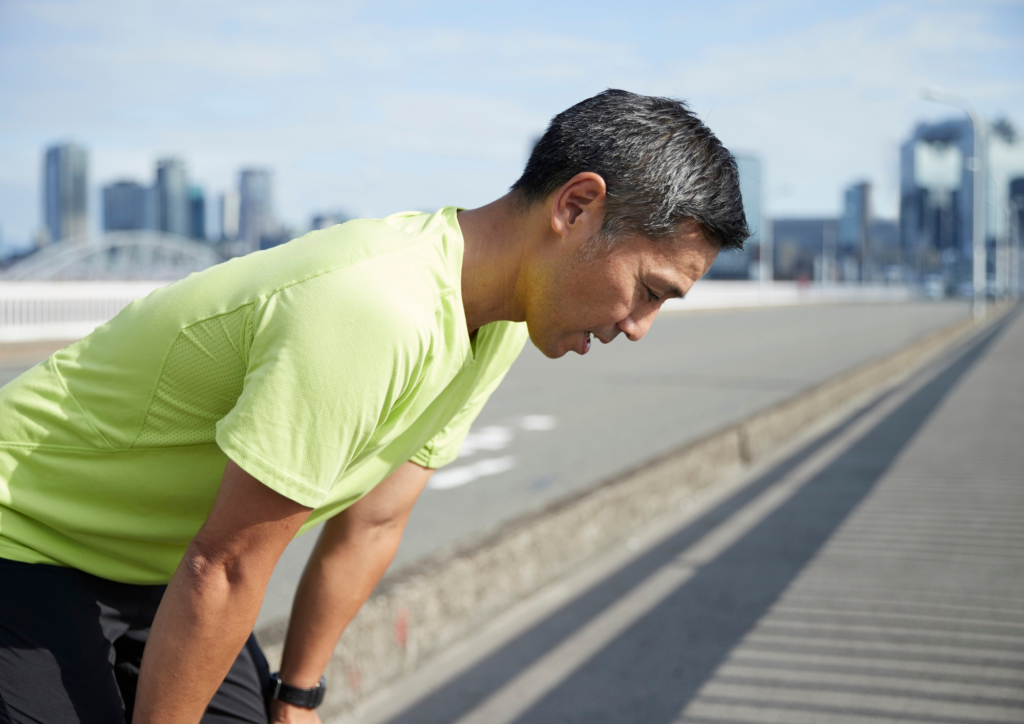
People who experience long-term breathlessness often worry about how hard everyday activities will feel. This concern can make them avoid tasks such as walking, climbing stairs or leaving the house. The study explored how what people expect about their breathlessness compares with what they actually experience.
83 adults with long-term breathlessness took part. They were asked to rate how breathless they expected to feel during daily activities. They then completed the activities and recorded how breathless they felt. This was done using a smartphone app over one week, several times a day.
The researchers also collected information about mood, wellbeing, confidence in handling breathlessness and other health factors to see if these influenced expectations.
Most participants expected to feel more breathless than they actually did. On average, participants overestimated their breathlessness by about 2 points on a 0–10 scale. This pattern was consistent throughout the week and from day to day.
Depressive symptoms influenced how strongly expectations and experiences were linked. However, overall accuracy, or how close expectations were to reality, was not affected by mood, anxiety or confidence.
Recent experiences of breathlessness strongly shaped what participants expected for the following week. This suggests that what people experience has more influence on expectations than the other way around.
Overestimating breathlessness can make people avoid physical activity. Avoidance can lead to reduced fitness, more breathlessness and social isolation. Understanding and addressing these expectations could help healthcare professionals give better advice and support.
Helping people plan activities more realistically could improve both physical health and quality of life. Digital tools, such as smartphone apps, may provide feedback to help people understand the difference between expected and actual breathlessness.
Read the original research paper: Expected Breathlessness Is Overestimated Compared to Experienced: A mEMA study
Sign up to get the latest information and research on lung conditions, hear about our upcoming events and campaigns, plus views from experts and patients! You can unsubscribe at any time.
ELF is a non-profit organisation registered as a UK company (VAT no. GB 115 0027 74) and charity (no. 1118930).
Our Brussels office enterprise number is 0738.383.695
European Lung Foundation's TR ID number in the Transparency Register is: 094039644810-79
| Cookie | Duration | Description |
|---|---|---|
| __Secure-ROLLOUT_TOKEN | 6 months | Description is currently not available. |
| __Secure-YEC | past | Description is currently not available. |
| __Secure-YNID | 6 months | Description is currently not available. |
| Cookie | Duration | Description |
|---|---|---|
| _clck | 1 year | Microsoft Clarity sets this cookie to retain the browser's Clarity User ID and settings exclusive to that website. This guarantees that actions taken during subsequent visits to the same website will be linked to the same user ID. |
| _clsk | 1 day | Microsoft Clarity sets this cookie to store and consolidate a user's pageviews into a single session recording. |
| _ga | 1 year 1 month 4 days | Google Analytics sets this cookie to calculate visitor, session and campaign data and track site usage for the site's analytics report. The cookie stores information anonymously and assigns a randomly generated number to recognise unique visitors. |
| _ga_* | 1 year 1 month 4 days | Google Analytics sets this cookie to store and count page views. |
| CLID | 1 year | Microsoft Clarity set this cookie to store information about how visitors interact with the website. The cookie helps to provide an analysis report. The data collection includes the number of visitors, where they visit the website, and the pages visited. |
| MR | 7 days | This cookie, set by Bing, is used to collect user information for analytics purposes. |
| SM | session | Microsoft Clarity cookie set this cookie for synchronizing the MUID across Microsoft domains. |
| Cookie | Duration | Description |
|---|---|---|
| yt-remote-cast-available | session | The yt-remote-cast-available cookie is used to store the user's preferences regarding whether casting is available on their YouTube video player. |
| yt-remote-cast-installed | session | The yt-remote-cast-installed cookie is used to store the user's video player preferences using embedded YouTube video. |
| yt-remote-connected-devices | never | YouTube sets this cookie to store the user's video preferences using embedded YouTube videos. |
| yt-remote-device-id | never | YouTube sets this cookie to store the user's video preferences using embedded YouTube videos. |
| yt-remote-fast-check-period | session | The yt-remote-fast-check-period cookie is used by YouTube to store the user's video player preferences for embedded YouTube videos. |
| yt-remote-session-app | session | The yt-remote-session-app cookie is used by YouTube to store user preferences and information about the interface of the embedded YouTube video player. |
| yt-remote-session-name | session | The yt-remote-session-name cookie is used by YouTube to store the user's video player preferences using embedded YouTube video. |
| ytidb::LAST_RESULT_ENTRY_KEY | never | The cookie ytidb::LAST_RESULT_ENTRY_KEY is used by YouTube to store the last search result entry that was clicked by the user. This information is used to improve the user experience by providing more relevant search results in the future. |
