New European project launched to help more people benefit from life-saving lung cancer screening through earlier detection and fairer access to care across 19 countries.
A new European project called SOLACE+ (Strengthening the screening of Lung Cancer in Europe – Pilots, Learning, Uptake and Sustainability) has launched to help more countries introduce high-quality lung cancer screening programmes and improve access for people at highest risk of developing lung cancer.
Lung cancer is the leading cause of cancer death in Europe, responsible for over 250,000 deaths annually. The launch coincides with Lung Cancer Awareness Month, underscoring the urgent need for action on Europe’s deadliest cancer.
Through Lungs Europe, ELF is a partner in the project, alongside the European Respiratory Society (ERS). Lungs Europe leads the work package focused on community engagement, outreach and dissemination. This work involves coordinating stakeholder engagement activities, managing the SOLACE+ website and Knowledge Hub and developing public awareness campaigns to raise the profile of lung cancer screening.
Working with the ELF Lung Cancer Patient Advisory Group and Lung Cancer Europe, ELF will ensure that people eligible for screening, patient communities and advocacy groups can contribute to help ensure the lived experience is represented in the SOLACE+ approach. ELF and ERS will also support policy outreach through the ERS/ELF-led MEP Lung Health group and facilitate the uptake of SOLACE+ recommendations by decision-makers across EU Member States.
The 3-year project, co-funded by the EU4Health Programme, builds on the achievements of the original SOLACE project. The first project screened more than 30,000 people across 11 countries and showed how targeted approaches can help more people access lung cancer screening. The findings also helped shape national screening policies in countries including Croatia.
SOLACE+ supports Europe’s Beating Cancer Plan, an EU initiative to improve cancer prevention, early detection, treatment and survivorship. As part of this work, the project will help countries introduce and improve lung cancer screening programmes for people at higher risk of developing lung cancer.
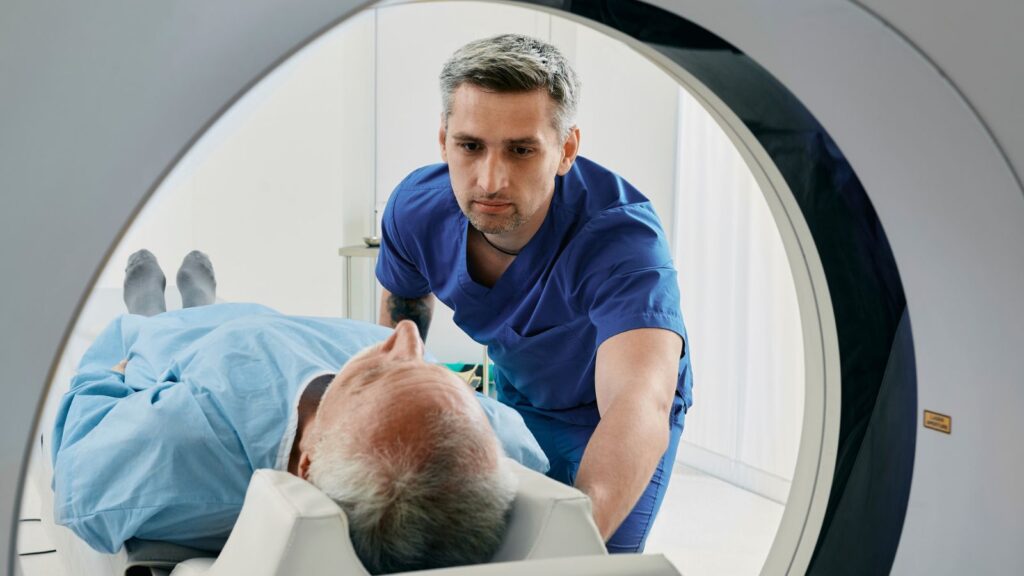
Lung cancer screening uses a low-dose CT (LDCT) scan, which can detect signs of lung cancer before symptoms appear. Research shows that screening can reduce lung cancer deaths, but access varies across Europe. SOLACE+ will help countries develop and improve screening programmes so that more people can benefit.
The project will focus on reaching people who may be less likely to access screening, improving the quality of screening programmes and supporting people to stop smoking.
The project will also explore how artificial intelligence (AI) can help healthcare professionals identify potential signs of lung cancer and improve the screening process. AI tools will support healthcare professionals, while decisions about a person’s care will continue to be made by trained medical experts.
Maria aged 68, from Athens, Greece, took part in the first SOLACE pilot programme. Although she had no symptoms, her CT scan detected a spot on her lungs that was later confirmed to be cancer. Reflecting on her experience, she said:
“I consider myself very lucky. If I had not participated, I wouldn’t have had any tests on my own. I had no symptoms to signal that there was any issue. When people ask me about screening, I tell them not to be afraid because this is an act of self-care. It absolutely has to do with loving your life.”
Torsten Blum, Scientific Co-Coordinator of the SOLACE+ project, said:
“Screening saves lives if people can access it and quality is consistent. SOLACE proved that targeted outreach works. We screened over 30,000 people across 11 countries and reached groups who are often missed. SOLACE+ is about taking what we learned and making it work at scale.”
Rozemarijn Vliegenthart, Scientific Co-Coordinator of the SOLACE+ project, added:
“Within SOLACE+ we will support 19 countries to build screening programmes that are sustainable, equitable and grounded in real-world evidence. That is how we turn lung cancer screening from a goal into practice.”
The project is coordinated by EIBIR (the European Institute for Biomedical Imaging Research) and scientifically led by Rozemarijn Vliegenthart and Torsten Blum with the support of Joanna Chorostowska-Wynimko and Helmut Prosch, representing the European Respiratory Society and the European Society of Radiology.
This project is co-funded under the EU4Health Programme 2021–2027 under grant agreement no. 101314323. Views and opinions expressed are however those of the author(s) only and do not necessarily reflect those of the European Union or the European Health and Digital Executive Agency. Neither the European Union nor the granting authority can be held responsible for them.