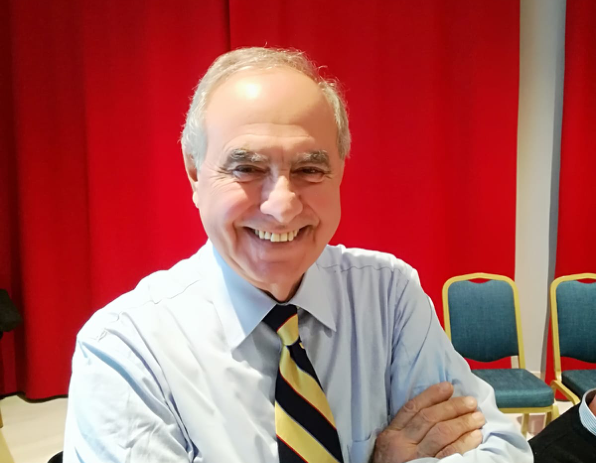
This month, we spoke with Luciano Cattani, the co-founder of the severe asthma association in Italy. Here, we get to know him a bit better and learn about his experience of receiving an unexpected asthma diagnosis later in life.
Late in my career, I held senior executive roles at a leading global pharmaceutical company and later at a global medical device company. I also served on several international medical device boards and advised private equity firms, with opportunities to travel extensively around the world.
This came to a sudden halt when, at the age of 65, I developed late-onset severe asthma — a completely unexpected diagnosis.
The years that followed were extremely difficult. I experienced five years of flare-ups, several emergency visits and growing concerns about my survival. My career ended abruptly, affecting both my income and my family’s quality of life, while I underwent repeated courses of oral corticosteroids and antibiotics and attended numerous consultations without receiving a clear diagnosis.
It took six years to receive a diagnosis and a further two years before I was prescribed the right treatment, which ultimately gave me my life back.
Through this experience, I learned first-hand how difficult it can be to access specialised care and timely diagnosis, particularly in Italy at that time. This motivated me to co-found AsmaGrave, Italy’s Severe Asthma Association, to improve care, raise awareness and provide support for people living with this condition.
Since 2022, I have been involved with the European Lung Foundation (ELF) through the Asthma Patient Advisory Group (PAG) and have contributed to European Respiratory Society (ERS) research initiatives and activities.
Participating in a session at the ERS Congress felt like a natural progression of my work as a patient advocate for severe asthma. The 2026 Congress’s focus on strengthening patient involvement in research that helps to improve respiratory health reflects my own experience. As an informed patient, former healthcare executive and representative of the severe asthma community, I believe I can add real value.
As a member of the Asthma PAG, I am currently contributing to an ERS Task Force addressing key topics in severe asthma. This includes a study on the evolution of severe asthma in older patients across 23 European countries, as well as work exploring the parameters for remission.
Bringing the patient perspective into research has, I believe, been meaningful. Ultimately, its impact is best judged by the researchers and clinicians involved, but it underlines the importance of collaboration between patients and healthcare professionals to improve care and outcomes.
My involvement with ELF developed from my earlier work with the European Federation of Allergy and Airways Diseases Patients’ Associations (EFA). Through AsmaGrave — which is part of FederASMA, the Italian federation for asthma and allergy associations — I was nominated to represent Italy within the European Lung Foundation and joined the Asthma PAG.
This enabled me to bring the perspectives of severe asthma patients into a wider European context. Building on my background in healthcare and patient advocacy, I then became involved in research initiatives and collaboration with clinicians and researchers.
Patients bring invaluable personal experience, offering insight into what quality of life truly means beyond clinical measures, as well as into the challenges of navigating healthcare systems and accessing appropriate multidisciplinary specialised care.
Despite progress, the severe asthma patient journey remains difficult, with diagnosis still delayed by close to three years on average. Many patients are still underdiagnosed or misdiagnosed and rely on repeated courses of corticosteroids and antibiotics, rather than receiving appropriate treatment, increasing the risk of related conditions such as diabetes, osteoporosis and cardiovascular disease.
Earlier diagnosis and better data on prevalence and access to treatments remain important unmet needs.
There is a long way to go, but involving patients in research brings clear value. Effective involvement requires preparation on both sides. Patients need support to be heard and to navigate the language of research and clinical care, while clinicians and researchers must engage in more accessible ways.
A good example is the management of flare-ups. Approaches vary across Europe — some countries provide patients with a “flare-up kit”, while in others patients receive little guidance on how to manage these episodes. Even these seemingly straightforward issues would benefit from better communication between patients and healthcare professionals.
The focus on patient-professional partnerships highlights the need to move from discussion to establishing clear, shared objectives. In severe asthma, this should include earlier identification of patients, faster diagnosis and timely access to effective treatments.
There are four key words to pursue: earlier, quicker, effective and together — all essential to improving awareness and understanding of severe asthma.