



COPD self-care guide
A practical guide for people living with COPD and those who support them.
Content Table
Download a printable PDF of the guide
You can view the guide on this page, or download a printable copy. Both options are available in multiple languages.
What is COPD?
Chronic obstructive pulmonary disease (COPD) is a long-term condition where the lungs and airways are damaged, reducing how well they work. This makes breathing difficult and it may worsen over time. COPD involves inflammation of the airways (bronchitis), narrowing of the airways, and damage to the lung tissue (emphysema). There is currently no cure, but treatments such as stopping smoking, exercise and rehabilitation, along with medications, can help to slow down how the disease develops and improve quality of life.
Symptoms, such as shortness of breath, coughing, excess sputum (phlegm) and fatigue, gradually worsen and can significantly affect quality of life. However, there are many steps that can help manage symptoms and improve daily wellbeing.
What can I do to look after myself with COPD?
There are many treatments available to support COPD. You can find out more about the different medications on the ELF COPD page.
There are also many things you can do yourself:
Protect your lungs
If you smoke, it is never too late to give up and stopping smoking should be a priority. The benefits begin within a few days. It is also important to avoid other sources of tobacco (for example, pipes or heated tobacco). Avoiding second-hand smoke and staying away from smoking areas can further protect lung health and may also support quitting. Find out more about quitting smoking and the benefits.
Reducing exposure to air pollution and occupational hazards also helps protect the lungs. Outdoor pollution from traffic, industry and household heating can worsen breathing and trigger symptoms. Checking daily air quality levels and avoiding busy roads or energetic outdoor activities on high-pollution days can reduce risks. Find out more about outdoor air pollution.
Certain jobs involve exposure to dust, chemicals or fumes that may cause or worsen lung conditions. Discussing workplace risks with a healthcare professional and following safety guidance can help minimise harm. Find out more about work-related lung conditions.
Stay active
When you exercise or carry out daily activities you may feel breathless. This is not dangerous and the breathlessness disappears rapidly when you stop exercising. Breathlessness can be very uncomfortable and scary but the worst thing you can do is avoid exercise. If you do, you will become unfit and lose muscle mass. This can lead to eventually feeling even more breathless during simple tasks and a higher risk of life-threatening complications.
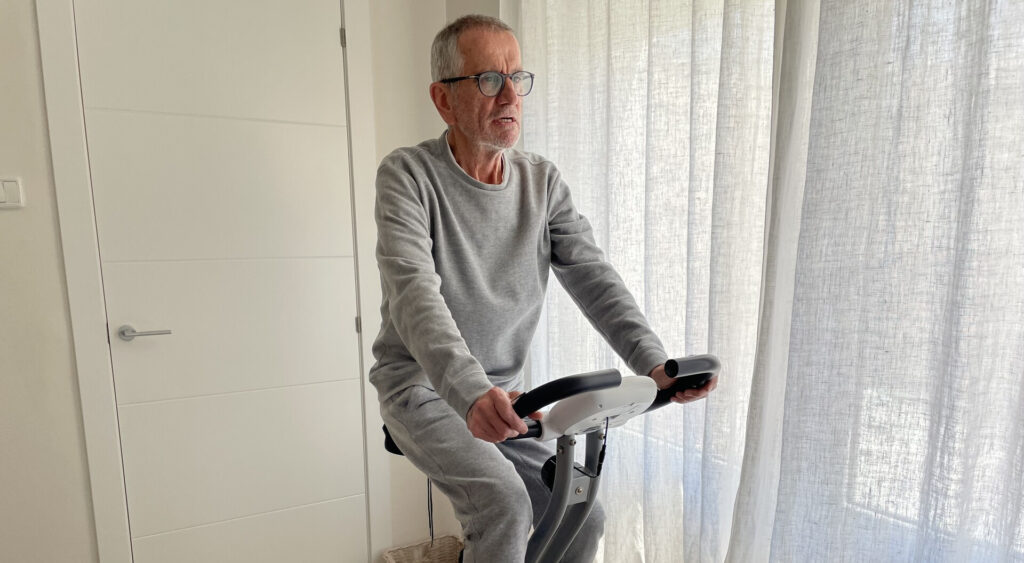
Try to exercise as often as you can to improve your overall fitness and wellbeing. You can practice by walking up the stairs. Stop when you need to rest and you will feel the shortness of breath disappearing rapidly. Sometimes, breathing through ‘pursed lips’ may help you to catch your breath. You can read more about breathing techniques in the ELF’s managing breathlessness page. Walking is an accessible form of exercise. Start at a gentle pace and gradually increase speed and duration as fitness improves. Rest whenever needed. A good target is 20 minutes, three days per week. If you cannot manage this, other options, such as chair-based exercise, are also possible. Discuss the best option for you with your healthcare provider.
It is advised to take reliever medication before exercise as this will also help relieve symptoms during activity.
Low oxygen levels can contribute to lactic acid build-up and muscle cramps. You may stay active and do exercise while using oxygen. Ask your healthcare provider for advice on how to manage this.
If your breathlessness suddenly becomes worse or does not disappear rapidly after exercise, you should see a doctor. If your breathlessness is becoming troublesome, it is very important that you follow a rehabilitation programme as advised by your doctor. Pulmonary rehabilitation will help you exercise for longer before feeling breathless, improve your symptoms and enhance your quality of life.
Different countries run pulmonary rehabilitation sessions in different ways. Check with your healthcare team about what is available in your area. You can also access some sessions online if there is nothing available to you locally.
Eat well
It is important that healthy eating becomes part of your daily routine. If you are feeling well, aim for 3-4 regular varied meals a day with:
- Protein, such as eggs, fish, chicken, dairy products, lentils, beans, tofu or nuts.
- Energy-providing foods, such as potatoes, bread, rice, pasta or cereals.
- Fruit and vegetables.
- Enough non-alcoholic fluid to stay hydrated.
If breathlessness, tiredness or poor appetite makes eating difficult, have smaller meals with nourishing snacks or drinks between them. Choose soft, moist foods that are easy to chew and swallow. Both excess weight and being underweight can affect your health and breathing. Unplanned weight or muscle loss is important even if you are overweight. Speak to your healthcare professional or dietitian if you are losing weight, eating less or becoming weaker.
To make eating easier:
- Eat when you have the most energy.
- Rest before meals and sit upright while eating.
- Eat slowly and take small mouthfuls.
- Add sauces or gravy if food is difficult to chew or swallow.
Talk to your healthcare professional or a dietitian for personalised nutrition advice. Dietary recommendations vary between countries and everyone has individual circumstances, such as health conditions, cultural preferences and lifestyle factors, that affects what works best for them.
Find out more about eating well.
Vaccinations
Infections, such as flu, COVID-19 or pneumoccal, can easily infect your lungs as living with COPD makes the lungs more susceptible compared to healthy lungs. Doctors recommend that you have a flu vaccine each year and a pneumonia vaccine if you are over 65 years old. Check with your healthcare team if you can also access other vaccines such as those for COVID-19, whooping cough (especially if you are in contact with young children), herpes zoster (shingles) or respiratory syncytial virus (RSV). Find out more about vaccination.
Managing tiredness
Tiredness can be a common symptom of COPD and it is important to recognise that feeling tired does not mean you are doing something wrong. You could use the three ‘Ps’ to help you manage this:
Plan – Prioritise – Pace
Plan
hink about when you usually have most energy in the day and plan activities for these times. Try to plan a consistent bedtime and avoid taking naps during the day – this can help you get a more complete night’s sleep. Different sleep positions could help, depending on your symptoms – some people with COPD benefit from being propped up on pillows, while others prefer lying flatter.
Prioritise
Decide each day what really needs to be done and what can wait. Look at how you can spread tasks and activities out throughout the week. Remove unnecessary tasks or look for shortcuts so you can spend more time on enjoyable activities that are good for your mental health. Ask family or friends for help with household chores. An occupational therapist can also provide practical strategies for managing daily activities at home or work with less energy expenditure.
Pace
Pace yourself throughout the day and break tasks into smaller, manageable steps. Spread out tasks so that you can rest in between.
Some people find the ‘spoons’ metaphor helpful: imagine you start each day with a set number of “spoons” (units of energy), which may be fewer after a poor night’s sleep or during a flare-up. Each activity uses spoons so getting out of bed might cost one, but walking the dog could cost three. Once you run out, you have nothing left to give. This can help you prioritise what truly matters and leave room for enjoyable activities that support your mental wellbeing.
If tiredness persists or worsens, talk to your healthcare team. It could suggest that your treatment plan needs adjustment or that other factors, such as sleep quality or nutrition, need attention.
Mental wellbeing
Living with COPD can bring emotional challenges. It is common to experience anxiety or depression alongside your physical symptoms. Stress can create a difficult cycle where it leaves you feeling run down and exhausted, which in turn can increase your risk of a flare-up. Recognising this connection is an important first step in breaking the cycle.
Staying socially connected plays a vital role in protecting your mental health. Keep in touch with friends and family and consider joining a COPD support group where you can share experiences with others who understand what you are going through. These connections can provide practical tips, emotional support and reassurance that you are not facing this alone. Many of these support groups meet online, so you can stay connected even when you feel too unwell to leave home.
If anxiety, depression or stress become overwhelming, speak with your healthcare professional. They can refer you to counselling, pulmonary rehabilitation programmes, or other support services that address both mental and physical health together. Seeking help is a sign of strength and managing your emotional wellbeing is just as important as managing your breathing.
Support from carers/family members
Sharing the load with family, partners, or carers can make managing daily life with COPD much easier. If you are managing multiple inhalers and treatments, it can feel overwhelming, so you could ask a carer or family member to help set up a weekly pill organiser or medication calendar to keep you on track.
It is also incredibly helpful to share the ‘traffic light’ guide (mentioned below) with your carers so they recognise the early signs of a flare-up and can support you in taking action quickly.
Manage other conditions
Many people with COPD also live with other long-term conditions, such as heart failure, diabetes or high blood pressure. Keeping on top of all your health conditions is important as they can affect each other and your overall wellbeing. Managing multiple conditions and balancing various medications can feel like a full-time job and repeating your information over and over to different doctors can be a challenge. Make sure you have a clear understanding of all your medications and are taking them correctly, attend regular check-ups, stick to your treatment routine and keep your healthcare team informed about any changes in your symptoms.
A coordinated approach to your care, where all your healthcare team communicate with each other, helps ensure treatments work together safely and effectively. Depending on where you live, you can ask if a ‘Case Manager’ or ‘Care Coordinator’ is available to help join up your care. If you feel your care is not working effectively, or if these specific roles are not available in your country, you can ask your doctor for a care or treatment review to check if any improvements can be made.
What will make me feel worse?
- Continuing to smoke.
- Not taking the recommended treatment.
- Using your inhaler incorrectly. Follow the links at the end of this document for further resources on using your inhaler correctly.
- Not dealing with other illnesses.
- Limited interaction with your friends and family.
- Not completing your usual level of daily activity.
- Not looking after your mental health, or becoming isolated at home.
How can I manage everyday life with COPD?
Home environment
Keep your home at a comfortable temperature. Cold and hot temperatures may make you feel worse. It is also good to check the humidity in your home. A moderate humidity level (around 40-45%) is good to aim for. A humidifier or dehumidifier can help to adjust the air if needed.
It is also best to avoid anything that generates indoor air pollution, such as candles, incense sticks or wood burners as they can all cause breathing problems. Avoid using strong chemical products such as polish and paints, as they may also irritate your airways and worsen your symptoms. If you have allergies, avoid exposure to any allergens, such as pet hair.
Clothing
Wear suitable clothes for the time of year. Try to wear loose garments that are easy to put on.
Sleep
Establish a routine for going to bed, getting up and resting. Avoid sleeping too much during the day and limit caffeine intake, as both can make it difficult to sleep at night.
Relationships and relaxing
Visit your friends as often as you can. When you prefer to stay at home, keep yourself entertained by doing your hobbies or just relax. You may also find it helpful to join in-person or online support groups for people living with COPD.
COPD symptoms and treatment may reduce your urge to have sex but this does not mean it is dangerous for you to do so. Slight increases in heart and breathing rate are normal. Talk to your partner about how you feel and any worries you may have. Your partner may feel it is better to avoid sex as they do not want to upset you. It is important to keep communicating honestly with each other as maintaining intimacy and closeness can help to combat any loneliness and isolation you may feel.
Travel
If you have COPD, you can still enjoy holidays and longer journeys. You may need to consider some advance planning to build in rest time and prepare for your specific needs.
-
Before you travel
Speak with your healthcare team well before your trip to discuss your travel plans. They can advise on whether you’re fit to travel, help you plan medication supplies, and provide letters confirming your need for oxygen or other equipment. If you’re flying, contact the airline as early as possible—requirements vary, and some need several weeks’ notice for medical equipment approval.
-
Driving
Driving requires concentration and energy, which can be affected by symptoms of tiredness. Plan regular breaks to rest and stretch, avoid long periods of time without stopping and consider sharing the driving if possible. If you are using oxygen bottles in a car, ensure they are stored securely. Never leave them in direct sunlight or a hot vehicle. Check with your home insurance provider about storing oxygen equipment, as some policies have specific requirements.
-
Public transport
Buses, trains and coaches can involve waiting, queuing and standing, which may be tiring or increase exposure to infections. To make this easier:
- Request special assistance in advance – many stations and airports offer wheelchair support, priority boarding or help with luggage
- Travel during off-peak hours to avoid crowds
- Plan rest stops along your journey and allow extra time so you do not feel rushed
-
Travelling with oxygen
If you use a portable oxygen concentrator, plan carefully around battery life. Battery capacity varies significantly, some last 2-3 hours, others 7+ hours. Before travelling:
- Check the amount of oxygen supplementation during air travel with your healthcare provider
- Check how long your battery lasts on your usual oxygen setting
- Bring spare batteries or a car charger for road trips
- Confirm electrical socket availability at your destination (plug types, voltage)
- Carry a backup plan in case of equipment failure or power cuts
-
Flying
You must check with the airline before you fly and give them as much notice as possible. Find out more about being ‘fit to fly’ on the ELF website.
If you are flying with a ventilator or oxygen, you will need a letter from your healthcare team to confirm why you need it. For full information on air travel with a lung condition and how to prepare for a trip, visit our air travel section.
What should I do if my symptoms change or get worse?
What is an exacerbation?
A noticeable worsening, or ‘flare-up’ of your condition is called an exacerbation. During an exacerbation, symptoms increase (for example, more breathlessness, cough or phlegm) and may be more severe than usual. This can be very distressing. Exacerbations are often triggered by bacterial or viral infections or times of poor environmental conditions. They can last for different amounts of time but usually between 7 and 21 days.
How can I spot an exacerbation early?
Spotting any changes early can help to manage an exacerbation. A traffic light system can help you recognise when your symptoms are changing and what action to take:
This table provides general guidance. Exacerbation management varies between countries and healthcare systems. Work with your healthcare team to create a personalised action plan that defines when and how to seek help in your local setting.
What should I do if I experience an exacerbation?
If you think you are experiencing an exacerbation, follow these steps:
- Check your self-management plan, if you have one, and follow the advice.
- Keep calm.
- Take your rescue inhalers.
- If you use oxygen, have it on all day but do not increase the amount that your doctor has prescribed.
- Try doing the relaxation and breathing techniques demonstrated to you by your doctor.
- Move around more slowly.
- Some people are prescribed oral steroids and/or antibiotics to keep at home. These can be used as an emergency or rescue treatment when an exacerbation starts. Always tell your healthcare professional if you have started taking them.
Your legs and feet may become swollen. If this happens:
- Keep your feet raised.
- See a healthcare professional if the problem does not go away within 3 days.
If you experience any of the following, please see your healthcare team:
- Coughing up blood
- Being more short of breath than normal
- Swollen legs and feet
- Pain in the side of your chest when you take a breath
- Drowsiness
- Feeling panicked.
After an exacerbation, take time to build back up your exercise routine. It is normal for this to take time and there is no need to rush back to where you were before. Gradually increasing your activity level will help you regain your strength safely and sustainably.
How can I prevent an exacerbation?
If you regularly experience exacerbations, it may have a disabling effect on your overall wellbeing that can last for months. Your illness will progress and you may have a lower quality of life. You should speak to your doctor about how to avoid worsening symptoms and how to manage them if they do get worse. Your doctor can work with you on a written action plan with goals that work for you.
Steroids and antibiotics may be given to control symptoms and fight off infection, as infections often cause exacerbations. To help prevent antimicrobial resistance (AMR), doctors avoid prescribing antibiotics unless there is a clear bacterial infection. The process for this differs across Europe: for example, in the UK, you may be prescribed a steroid first and only given antibiotics if your phlegm changes colour, while in the Netherlands, steroids are used as a first-line treatment and antibiotics are not routinely given in rescue packs.
It is important to follow regular hygiene practices and keep up to date with your recommended vaccinations, along with your normal medication. If you experience a very serious exacerbation, you may go into hospital so that doctors can control your symptoms and give you more suitable treatment.
Planning for the future and palliative care
COPD can get worse over time so it can be helpful to think early about how things might change in the future. Introducing palliative care early is not the same as end-of-life care. It is a holistic approach focused on improving your day-to-day quality of life. It aims to relieve the impact of your symptoms and offer emotional, psychological and spiritual support.
Find out more about palliative care for people living with COPD.
- How carers support palliative care at home: your carers play a vital role in day-to-day palliative comfort. They can help monitor your symptom changes, assist with non-medical breathing techniques, and manage comfort measures like positioning and pacing, ensuring you can rest easily and maintain your independence for as long as possible.
- Managing hospital stays and deterioration: if you find yourself in and out of hospital, or if your mobility begins to decline rapidly, your carers may become your main advocates. They can act as your voice, helping healthcare staff understand your daily routine and ensuring your physical comfort and emotional needs are met.
- The role of your carers in emergency planning: it is important to share your treatment preferences with your carers and family members, such as your feelings about hospital admissions or ventilation support. This will empower them to advocate confidently for your wishes if you ever become too unwell to speak for yourself.
How might my condition get worse?
You may find that your everyday breathlessness increases slightly, your energy levels change, or you become tired more easily during day-to-day tasks. The best way to stay as stable as possible and slow down this progression is through active, daily self-management. This includes taking your prescribed medications consistently, staying physically active and keeping up to date with your vaccinations (see our sections on ‘What can I do to look after myself?’ and ‘Managing everyday life’ above).
To track this overall progression, rather than just temporary flare-ups, your healthcare team will monitor your condition regularly over the years using breathing tests, activity tests or CT scans.
How will my condition be monitored?
It is important that you regularly visit your doctor or nurse. They will ask how you are feeling and whether your treatment is working. This is your opportunity to talk to your healthcare professional about how you are feeling, your symptoms and your needs. If you use a digital tool or app to help track your symptoms, it is worth looking through your records on this to understand what is happening with your symptoms and help you prepare for the conversation. Tests that your doctor might perform to check your condition include:
- A spirometry test. This test is used to diagnose COPD and may help to show how your illness is progressing. The test involves taking in as deep a breath as possible to fill your lungs with air and breathing out as hard and fast as you can for at least 6 seconds into a machine.
- Oximetry. This is a very simple and painless way to check whether you have enough oxygen in your blood. It detects the colour of the blood pulsating through the tip of your finger. If the reading is low you may be advised to have arterial blood gas testing. This measures exactly how much oxygen and carbon dioxide you have in your blood and will tell the doctor whether you need extra oxygen.
- A quality of life questionnaire. This will include questions that ask how you are feeling and how you cope with certain activities. It will show whether your treatment is helping your condition. Some healthcare teams now use digital versions through telephone apps, which can also track your wellbeing over time, including anxiety and depression. In some countries, completing these questionnaires on an app links directly to your electronic health record, so your healthcare professional can review your responses at your next appointment.
- Blood tests. These tests can show other causes of your symptoms, such as anaemia causing shortness of breath. These tests can also show if there are issues with your other organs, like your kidneys and heart. Blood tests can tell your doctor if you are able to have a newer type of COPD treatment called biologics, although these are not available in all countries yet.
- A chest X-ray or CT scan. These tests help rule out other causes of your symptoms and show what changes are present in your lungs and how much they affect you. Because lung conditions vary from person to person, these scans help your healthcare team understand your specific situation.
- A six-minute walk test. This shows the doctor how far you can walk in six minutes, how difficult you find it and whether your oxygen level remains stable.
Oxygen: If you use oxygen at home, your healthcare team will monitor your usage and flow rate to ensure you’re receiving the right amount. If you live with other conditions, such as sleep apnoea, they may be monitored remotely.
Regular review
You should have a regular review with your healthcare team, though the format varies by country. Ideally, a review each year is recommended. Ask your healthcare professional what your review includes and whether you are up to date with recommended vaccinations. In some countries you may need to directly request this if it is not offered routinely.
Where can I find support and further information?
COPD information
Smoking and quitting
Patient involvement and advocacy
- ELF COPD Patient Advisory Group
- European Patient Ambassador Programme (EPAP) – online training for patients and carers
- Find patient organisations by location
Inhalers
Pulmonary rehabilitation
- Pulmonary rehabilitation
- Pulmonary rehabilitation (Ireland)
- Pulmonary rehabilitation (Turkey – Turkish)
- Pulmonary rehabilitation (UK)
- Rehabilitation videos (US)
Digital tools and apps
Acknowledgements
This document was produced by members of the ELF Patient Advisory Group and with thanks to members of the Asociacion de Pacientes con EPOC (APEPOC) for sharing their photos.
It was reviewed by the following healthcare professionals:
- Sachin Ananth, Chair of the Core Outcome Set for Clinical Trials on Chronic Obstructive Pulmonary Disease maintenance pharmacotherapy
- Professor Nurdan Köktürk, Gazi University Hospital, Ankara, Turkey
- Dr Katharina Koethke, University Hospital Schleswig-Holstein, Kiel, Germany
- Professor Frits Franssen, University Medical Centre Maastricht, Maastricht, Netherlands
- Professor Pierre-Régis Burgel, Hôpital Cochin, Paris, France
- Professor Marco Contoli, Ferrara University Hospital, Ferrara, Italy
Professors Köktürk, Koethke, Franssen, Burgel and Contoli are part of the CICERO Clinical Research Collaboration (CRC), a European network focused on COPD research and clinical practice. Find out more about CICERO
