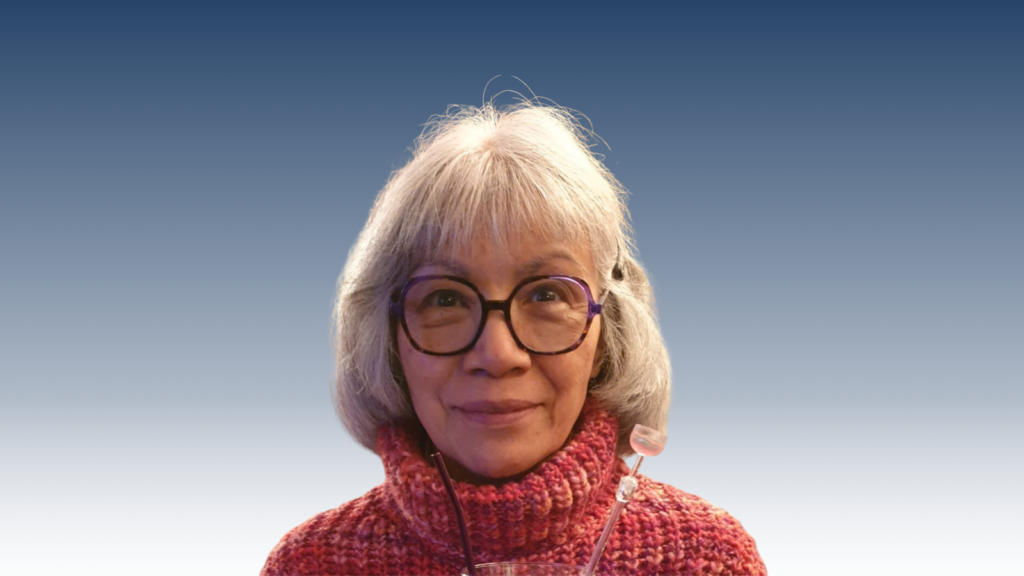
This month, we spoke with Justine Hamaïde, founder of the French NTM patient organisation MNT Mon Poumon Mon Air. Here, we get to know her a little better and learn about her experience of living with bronchiectasis and NTM pulmonary disease (NTM-PD), and how it inspired her to support others affected by the condition.
I am French and live in Paris. Before retiring, I worked as a Telecom Engineer and Change Management Consultant in various countries, including Mexico, Côte d’Ivoire and Benin. In my free time, I enjoy walking and hiking, which I find is one of the best ways to discover a country.
From 2015, my health began to cause me problems. For three and a half years, I had frequent colds and bronchitis, but antibiotics did not help. I was often off sick because I relapsed and was losing weight.
Looking back, I do not think I fully understood how serious my condition might be, even when my pulmonologist explained that I might need long-term treatment and I was hospitalised for tests.
After three and a half years of searching for answers, I was diagnosed in 2018 with bronchiectasis and non-tuberculous mycobacteria pulmonary infection (NTM-PD).
This diagnosis came as a shock. I finally understood why I had been ill for so long, but I also learned that NTM-PD is very rare and that treatment could involve 18 months of antibiotics. I was told that, as these bacteria are found in the environment, including water, soil and dust, I should take precautions in my daily life.
There was so much to understand and process that I sought support from a psychologist to help me come to terms with it all.
There are many challenges when you live with NTM-PD.
One of the biggest is explaining the disease to others. These bacteria are found everywhere in the environment, including water, air, soil and dust. Everyone breathes them, but only some people develop the disease. This can make it difficult for others to understand why I am unwell while those around me are not.
Because it is an invisible disease (or invisible respiratory disability), I sometimes feel misunderstood despite the kindness and support of family and friends.
Treatment can also be difficult to cope with. An 18-month course of several antibiotics has many side effects and often left me feeling tired, affecting my daily life and work.
I also need to think about limiting my exposure to these bacteria while continuing to live my life. I wear a mask on public transport and in crowded places, and I take extra care during cold or humid weather to reduce the risk of infections and flare-ups.
To manage my condition, I have respiratory physiotherapy, stay physically active and maintain a healthy diet.
Most importantly, I remain optimistic and continue to enjoy a social life because I do not want the disease to prevent me from living as normally as possible.
I went through my journey to diagnosis alone because my personal and professional circle did not understand why I was “always sick with a cold.”
After my diagnosis in 2018, I wanted to talk to people living with the same rare lung disease, but it was not possible. There was no support group, and I had no way of getting in touch with other NTM patients.
By 2020, I had come to terms with the disease. I have NTM-PD, but the disease does not define me. Taking a step back, I realised that others living with the condition should not face the disease alone.
Based on my own experience, I wanted to provide NTM patients with the support I had lacked, from diagnosis through to managing daily life and maintaining a good quality of life.
I always remember something my pulmonologist once told me, “I need you to better know and understand this disease”.
This was the beginning of my journey to becoming a patient partner, which I completed certification for in 2022.
My goal is to turn my experience of living with the disease into something positive by supporting other patients and advocating for better care and more research.
My motivation for creating MNT Mon Poumon Mon Air was simple. I wanted to help people living with NTM-PD. My pulmonologist also encouraged me, explaining that there was no patient organisation in France and that one would be useful to help patients and healthcare professionals.
I founded MNT Mon Poumon Mon Air in February 2023.
The organisation enables patients to connect through monthly meetings and provides information and support for patients, families and caregivers.
I am very grateful to the Scientific Committee, made up of 10 NTM specialists, who support the organisation and help answer our questions.
Thanks to their involvement, we regularly organise webinars on topics related to the disease, including respiratory physiotherapy, adapted physical activity and nutrition, followed by question-and-answer sessions.
An important goal of the organisation is to advocate, in partnership with the Scientific Committee, for better care and more research into NTM-PD.
The theme means to me that we must pay attention to collaboration between patients and healthcare professionals.
For patient chairs and speakers, it shows that patients have a real place alongside healthcare professionals to discuss shared challenges and goals.
Different points of view and types of knowledge are complementary. Including patients at ERS Congress helps ensure that all aspects of a disease are considered, particularly its impact on daily life and how it is managed by those living with it.
Patients may not use medical or scientific language, but it is important to include them in these conversations because their lived experiences of a disease offer valuable insights.
From my own experience, I find healthcare professionals are understanding and increasingly interested in cooperating with patients as partners.
Whilst World NTM Awareness Day is marked around the world on 4 August, NTM-PD remains an important public health issue throughout the year.
I would like people to understand that these bacteria are found everywhere in the environment, and that greater awareness, prevention and earlier diagnosis are needed. Everyone can take steps to reduce their exposure, and there should be no shame attached to doing so. I would also encourage healthcare professionals to investigate seemingly minor symptoms earlier to help avoid delays in diagnosis and give patients the opportunity to access care sooner and maintain a better quality of life.
I encourage those living with the condition to remain positive because they are not alone, and I thank the healthcare professionals who support them.
Policymakers also have an important role to play by supporting awareness, prevention and research. Sufficient funding is needed to improve care, develop more effective treatments and ultimately find a cure for people living with NTM-PD.
Finally, I would like to thank ELF for giving me the opportunity to share my experience and raise awareness of NTM-PD.