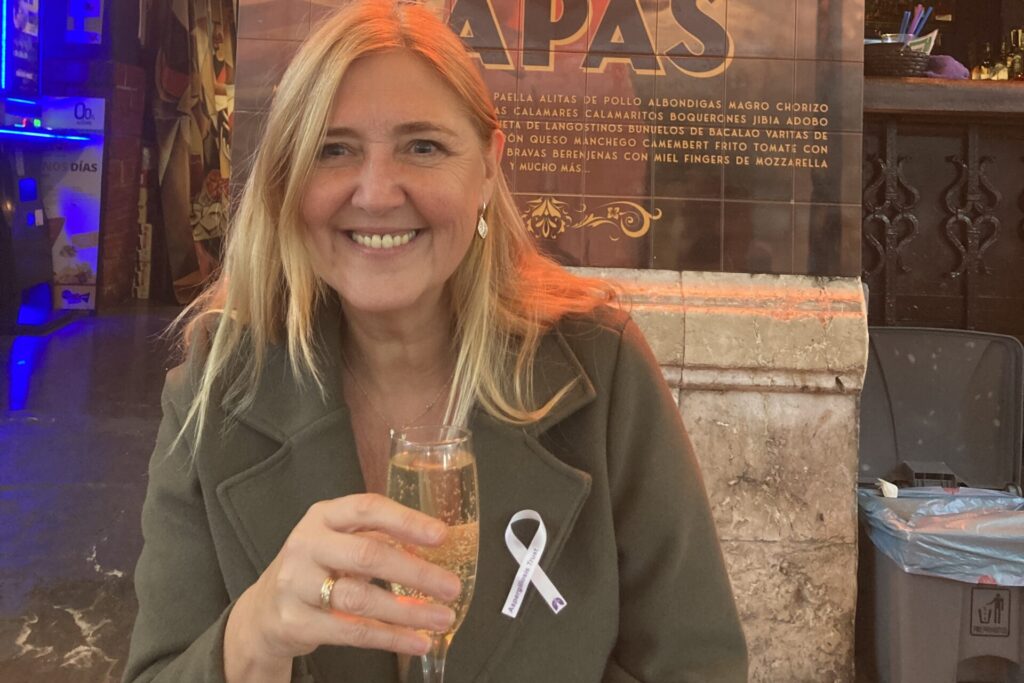
This month, we spoke with Lisa McNeil, Chair of the Aspergillosis Trust and member of the ELF Aspergillosis Patient Advisory Group. Lisa shared highlights of her involvement in ELF activities this year, from co-chairing the first ELF Aspergillosis Patient Conference to attending the ERS Congress as a patient representative, and discussed her hopes for 2026.
My name is Lisa, and I live with aspergillus bronchitis alongside bronchiectasis and cardiomyopathy. Managing a long-term respiratory condition has shaped every part of my life, from giving up my job, missing out on family occasions to pacing my energy and dealing with flare-ups. Navigating the emotional and practical challenges that come with a chronic illness has been challenging.
I was part of a small group of patients who came together to create the charity the Aspergillosis Trust and I now serve as its Chair. Having lived experience allows me to advocate with authenticity and compassion, ensuring our work stays grounded in the realities that patients face. Over the last year especially, I have felt incredibly proud of what we have achieved as a community-led charity.
My diagnosis came after a long period of repeated infections that required hospital stays. Like many others, I knew there was something going on that was not being fully understood. I got a second opinion and was referred to the National Aspergillosis Centre in Wythenshawe, Manchester (UK). When the aspergillus bronchitis diagnosis was finally confirmed, it brought both relief at having an answer and a huge sense of uncertainty about what the future would look like.
Since then, my journey has been a mix of difficult days and hopeful ones. Learning to manage my condition, finding the right treatments and connecting with others living with aspergillus-related disease has been incredibly empowering. Over time, my personal experience has shifted into purpose and that continues to motivate everything I do.
That is a really good question and I am not really sure. I think it just began naturally for me. I wanted to understand my own condition, but I also wanted to help others who were struggling with delayed diagnosis, limited awareness or the feeling of being dismissed and unheard. Becoming part of the team that founded the Aspergillosis Trust was a turning point. We created the charity because patients needed support, visibility and a voice. Over the years, my involvement has grown into shaping resources, speaking at conferences, contributing to research discussions and supporting people at every stage of their journey. It has been one of the most meaningful parts of my life.
Co-chairing the conference was a real privilege. It was a day filled with thoughtful discussion and compassion. What stood out to me was how genuine the collaboration felt; patients, clinicians and researchers all leaning in, asking questions and sharing perspectives that complemented one another. Being able to guide conversations through the lens of lived experience helped make the event more relatable and emotionally grounded. It was an honour to help shape a space where so many people felt understood and supported.
Patients bring honesty and real-life perspective and we remind the clinicians and researchers that this is what it is really about. Patients understand the daily impact of symptoms, medication side effects, fatigue and the emotional weight these conditions carry. When Marcela described what it is like to live with this condition I was honestly moved to tears. Her story was so honest and raw and yet she is out here doing the same as me, desperate to ensure that others have a better journey than we did.
When patients help host or shape an event, the focus naturally becomes more human, more connected to the realities people are living with. It also reassures attendees that their voices matter and that they are not alone. Our presence strengthens the relevance and compassion of every session.
2025 has been an exceptional year both personally and for the charity. Several highlights come to mind:
Start with what feels comfortable and meaningful to you. Advocacy is not about being an expert and knowing everything, it is about sharing your experience, offering support where you can and using your voice to make life better for yourself and for others. Joining a PAG is a wonderful first step. It gives you and a group of people who truly understand what you have lived through. Every perspective matters and even small contributions can make a real change.
Gosh, that is a hard one as I have so many! I hope 2026 brings even more opportunities for genuine collaboration between patients, clinicians and researchers. I would love to see:
I would simply like to say how proud I am of our community. The strength and resilience I see in patients and families is extraordinary. This year in particular has shown what we can achieve when we come together, from publishing a children’s book to hosting meaningful awareness events, to honouring those we have lost through our “Holding on to Hope” tree.
I am grateful to ELF for continually involving patients as equal partners and for helping ensure our voices shape the future of aspergillus related care. Together, we are creating real change and I feel honoured to be a part of it.