LungHealth4Life (LH4L) is an EU‑funded project working to improve children’s lung health throughout Europe. Now at its halfway point, the project is providing important insights into how lung health education and early testing can be implemented in real-world school settings.
Through Lungs Europe, ELF coordinates the project, working with six European partners. Pilot activities have so far been delivered in schools in Poland and Portugal. ELF also co-leads communication and dissemination activities, ensuring that project findings are shared in a clear and accessible way with wider audiences. This includes supporting outreach activities, raising awareness of lung health and helping to translate project learning into longer-term policy and sustainability efforts.
Long-term lung conditions remain a major and growing public health challenge. Evidence shows that lung health is shaped by early life and influenced by a combination of genetics, environmental and social factors. Air pollution, housing conditions and socio-economic inequality can all affect how lungs develop and increase the risk of respiratory problems later in life.
By improving awareness early in life, LH4L aims to support healthier behaviours and increase understanding of lung health and its risk factors. The project works with schools to deliver lung health education and lung function testing, known as spirometry, helping children, families and teachers learn more about how lungs develop and how to protect them.
LungHealth4Life uses schools-based activities to help children learn about lung health early in life. These sessions focus on education and awareness, helping children understand how the lungs work and how everyday factors such as air quality and lifestyle choices can affect breathing.
In Poland and Portugal, educational sessions in participating schools are combined with lung function testing, helping children connect classroom learning with their own health and encouraging early awareness of lung health. This helps children connect classroom learning with their own lung health and encourages early awareness of lung health.
Schools are selected with local partners, focusing on areas with fewer social and economic resources and greater exposure to air pollution, both of which can affect children’s lung health and access to health information. While core messages remain consistent, sessions are adapted to local contexts, allowing the project to explore how environment, school resources and family involvement shape how lung health education is received. Working across different settings helps ensure the approach is relevant, accessible and meaningful for children and families.
So far, almost 500 children have taken part in spirometry activities, with strong engagement from schools and families supporting implementation.
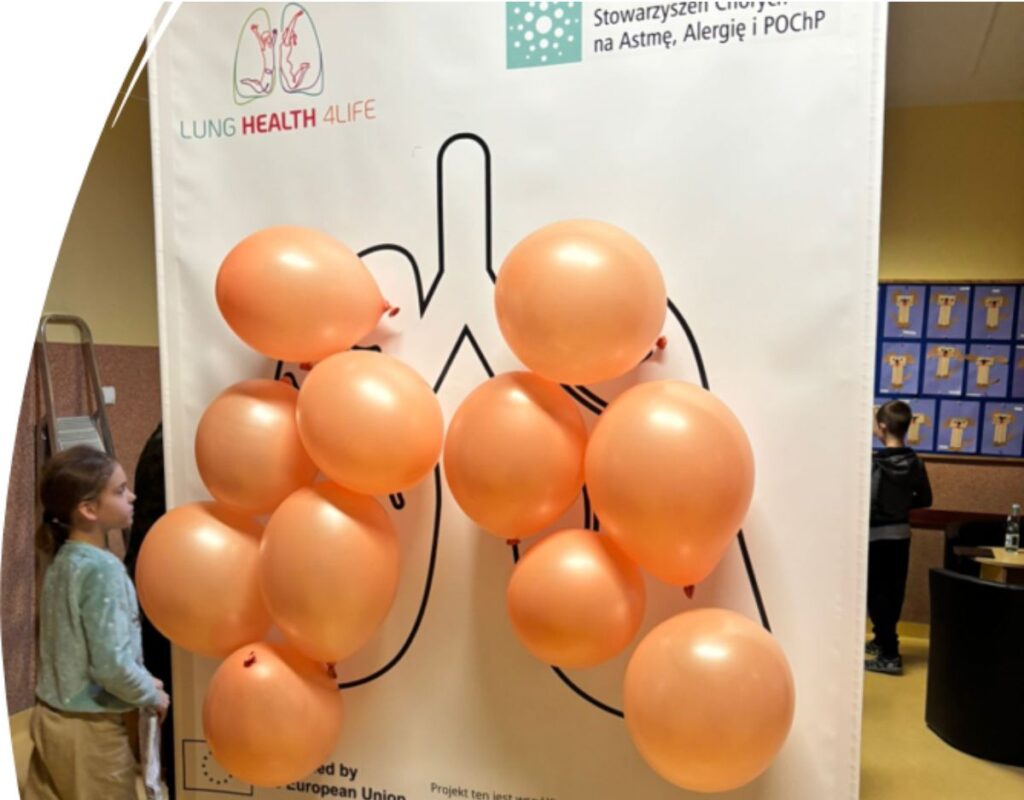
In Poland, LungHealth4Life activities took place in Legionowo, a small town near Warsaw, where children are exposed to higher levels of air pollution and social inequality.
Two schools took part in the activities, with sessions delivered to children aged 7-12, helping them understand how the lungs work and how environmental factors can affect breathing. Lung function testing was also carried out in schools, supported locally by the Polish Federation of Asthma, Allergy and COPD Patients’ Associations. 144 children completed lung function testing.
During implementation, the team identified challenges in completing parent-reported health questionnaires, which are used to support testing. In response, they developed a short explanatory video to help families understand the process more clearly. This improved the quality of information provided and supported smoother delivery in later sessions.
Read more: The Polish Federation of Asthma, Allergy and COPD Patients’ Associations goes to schools
In Portugal, LungHealth4Life activities took place in two primary schools in Vila Real de Santo António, in southern Portugal, involving 306 children.
The schools are located in an area with higher levels of social and economic disadvantage, where families may face additional challenges linked to income, education and access to health information.
Educational sessions and lung function testing were delivered in schools by volunteers from the Portuguese Association of General and Family Medicine. Activities were designed to fit within the school timetable and encourage participation from both children and their families. Workshops were also offered to parents to support continued engagement at home.
Read more: Teaching children to care for their lungs in primary schools in Portugal
The project will continue with schools-based activities planned for Hungary, where around 300 pupils will take part in the LungHealth4Life programme. This will further explore how lung health education and lung function testing can be delivered in different school settings.
In Poland and Portugal, children who have already taken part will complete follow‑up questionnaires. These will help the project teams understand what pupils remember from the sessions and whether the activities have influenced everyday behaviours. Parents will also be asked whether they have made any changes at home.
All data from the project will be analysed to assess the overall impact of the LungHealth4Life approach. This will help determine how effective early lung health education and lung function testing are in supporting awareness, understanding and healthier behaviours in children and families.
Learn more about the project: https://europeanlung.org/lunghealth4life/