
An upcoming patient conference on antimicrobial resistance (AMR) in long-term lung disease will bring together patients, healthcare professionals, researchers and advocates to explore how we can better understand and tackle it.
On 18 November 2026, an online patient conference will explore the impact of antimicrobial resistance (AMR) and provide opportunities for patients to contribute to research, advocacy and healthcare discussions. Attendees will hear from experts and people with lived experience from around the world.
AMR is one of the biggest challenges facing healthcare. AMR occurs when bacteria, viruses, fungi and parasites no longer respond to medicines designed to treat them, making infections harder to manage. For people living with long-term lung diseases, recurrent infections and repeated courses of treatment can make understanding and awareness of AMR particularly important.
Ahead of the event, we spoke with Lisa McNeil and Dr Christina Thornton about their experiences, why patient involvement matters and what they hope participants will take away from the conference.
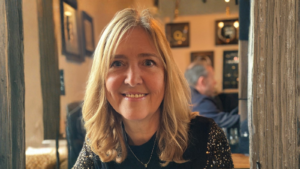
Lisa McNeil is Chair of the Aspergillosis Trust and a member of the European Lung Foundation (ELF) Aspergillosis Patient Advisory Group (PAG). Living with bronchiectasis, cardiomyopathy and Aspergillus bronchitis, Lisa is a passionate advocate for people affected by aspergillosis and other long-term lung conditions. Through her work with patient organisations, researchers and healthcare professionals, she helps ensure that patient experiences inform lung health and research. At the conference, Lisa will co-chair a session exploring global perspectives on AMR and the importance of including patient voices in discussions about infection management and treatment.
Through my involvement with the European Lung Foundation’s Aspergillosis Patient Advisory Group (PAG), I have had the opportunity to work alongside researchers and healthcare professionals and help ensure that patient experiences inform lung health research and care.
This led me to become involved with the AMR-Lung Clinical Research Collaboration (CRC). As part of this work, I learned more about antimicrobial resistance, began working more closely with clinicians in this field and became involved in the conference.
For me, this demonstrates the value of patient involvement. It creates opportunities to contribute beyond our own conditions and helps ensure that the patient perspective is part of conversations that ultimately affect our care.
I am looking forward to bringing together patients, clinicians and researchers to explore AMR from different perspectives. I am particularly pleased that the programme includes patient experiences from different countries. Hearing how people experience infections, access treatment and navigate healthcare systems can help us understand both the challenges we share and the differences that need to be recognised.
I also hope we can make a complex subject more accessible and give patients the confidence to ask questions and feel involved in conversations about their care.
For those of us living with long-term lung conditions, infections can be a recurring part of life, which means antibiotics and other antimicrobial treatments often play an important role. Understanding AMR can help patients feel more informed about their treatment options and have better conversations with their healthcare teams.
For me, it is about being informed rather than frightened. Patients should not feel guilty about needing treatment, but should have the information they need to understand their options and take part in decisions about their care.
It is equally important that patient voices are part of conversations about AMR. Patients understand the day-to-day impact of recurrent infections and can help identify the questions, information and outcomes that matter most. Hearing experiences from different countries is especially valuable because access to testing, specialist care and treatment can vary considerably.
I would like people to leave with a better understanding of AMR, but also with the reassurance that they do not have to navigate this subject alone.
For patients, I hope the conference demonstrates that it is okay to ask questions, understand why a treatment is recommended and be involved in decisions about care. I would also like clinicians and researchers to recognise how much patients can contribute.
If we listen to one another and work together, we have a much better chance of improving care and making a meaningful difference to people living with long-term lung conditions.

Dr Christina Thornton is a respirologist and physician-scientist at the University of Calgary, Canada, and co-chair of the AMR-Lung Clinical Research Collaboration (CRC). She cares for people living with bronchiectasis, cystic fibrosis and non-tuberculous mycobacterial (NTM), and her research focuses on antimicrobial resistance (AMR) and long-term lung infections. Through the AMR-Lung CRC, she works with clinicians, microbiologists, researchers and patients from around the world to improve understanding of resistant infections and develop better approaches to diagnosis, treatment and care. At the conference, Christina will discuss what AMR is, why it is a growing global health challenge and why it is particularly relevant for people living with long-term lung conditions.
Why is it particularly important for people living with long-term lung diseases to understand AMR?
Antimicrobial resistance happens when bacteria, fungi and other microbes evolve to survive the medicines designed to treat them. For people living with long-term lung conditions, this is not an abstract or future problem. Many rely on repeated courses of antibiotics or antifungals to manage infections, making AMR particularly relevant to their day-to-day care.
Over time, the treatments that work can become more limited, which may mean more hospital visits, more side effects and fewer options when treatment is needed most. Understanding AMR can help people ask informed questions, take an active role in decisions about their care and better understand the medicines they rely on.
What developments in AMR research and care give you the most hope for the future?
There is a lot to be hopeful about. International databases (registries) are helping researchers build a clearer picture of resistant infections in people with long-term lung conditions, while new technologies are being developed that can diagnose infections and resistance more quickly and accurately.
We are also seeing new approaches that go beyond antibiotics alone, including treatments that reduce flare-ups, therapies that target bacteria more precisely and research into bacteriophages, viruses that can infect and kill specific bacteria. Together, these advances could help reduce the need for antibiotics and improve outcomes for patients.
What do you hope attendees will take away from the conference?
I hope people leave understanding that AMR is not someone else’s problem or a distant threat. It is happening now, and people with long-term lung diseases are among those most affected.
Most of all, I want people to leave feeling informed, hopeful and empowered. The research community is paying more attention to AMR in long-term lung disease than ever before, and patients are increasingly recognised as partners in that work. Your experiences matter, and you can play an important role in helping shape future research, care and solutions.
The 2026 patient conference on antimicrobial resistance in long-term lung disease will take place online via Zoom on 18 November. The event is free to attend and is open to patients, carers, healthcare professionals, researchers and anyone interested in learning more about AMR and its impact on lung health.
Join us to hear from international experts and patient advocates, learn about the latest developments in AMR research and take part in discussions about how patients can help shape the future of infection management and care.
The conference will be held in English. A live transcription service will enable participants to generate captions in more than 60 languages.