
 European Lung Foundation


Our core content on Lung conditions and related factsheets has been translated to a number of other languages by our volunteer team.
For more languages explore all available Factsheet translations.
Volunteer as a translator or learn how to translate using Chrome, Firefox or Edge browsers.
Home » First episode of new ERS video series features Bronchiectasis Patient Advisory Group
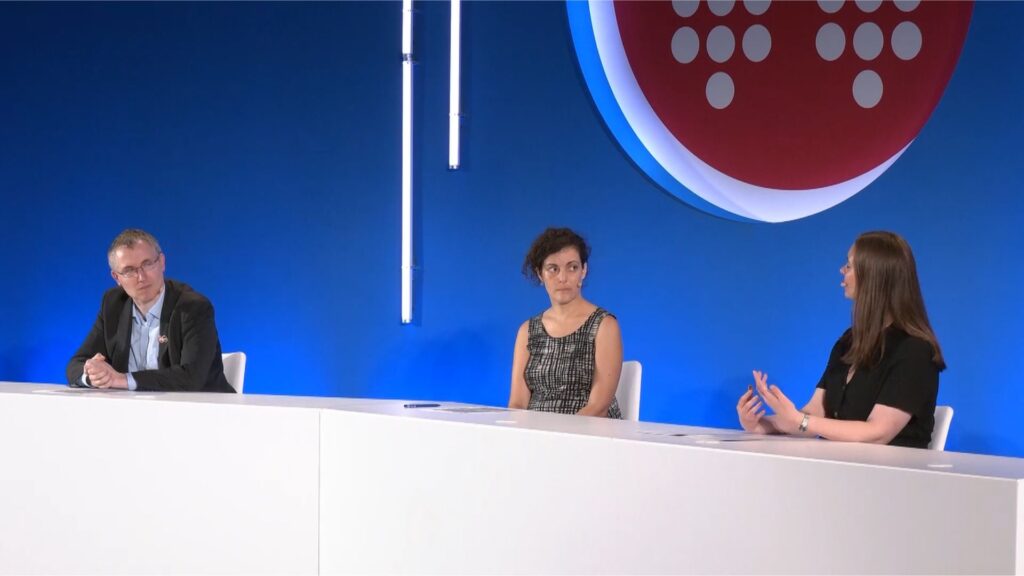
ELF Bronchiectasis Patient Advisory Group member Eliza Kompatsiari featured in new ERS Respiratory Channel video series.
A new video discussion series from the European Respiratory Society (ERS) Respiratory Channel, Translational science from bench to bedside, explores how people living with lung conditions, researchers and healthcare professionals can work together to improve treatment and care.
The first episode focuses on bronchiectasis, a long-term lung condition that causes the airways to become damaged and widened. This can lead to symptoms such as a long-term cough, repeated chest infections and breathlessness.
The discussion also explores research into DPP-1 inhibitors, a potential new type of treatment for bronchiectasis. These medicines are designed to reduce harmful swelling (inflammation) in the lungs, which researchers hope could help reduce flare-ups and lung damage for some people living with the condition.
The discussion features:
In the episode, Eliza shares her experiences of living with bronchiectasis and discusses why it is important for people with lived experience to be involved in research. By sharing the day-to-day realities of living with a lung condition, patients can help researchers and healthcare professionals better understand what matters most to the people their work is intended to help.
Patient perspectives can help identify unmet needs, shape research priorities and ensure that future treatments focus on outcomes that can make a meaningful difference to people’s lives.
Professor James Chalmers concluded in the discussion: “We need to keep clinicians, scientists and patients in the room together.”
Whether you are living with bronchiectasis, supporting someone with a lung condition or interested in patient involvement in research, the discussion offers an accessible introduction to how new treatments are developed and why patient voices matter.
Watch the first episode: Bronchiectasis and DPP-1 inhibitors
Sign up to get the latest information and research on lung conditions, hear about our upcoming events and campaigns, plus views from experts and patients! You can unsubscribe at any time.
ELF is a non-profit organisation registered as a UK company (VAT no. GB 115 0027 74) and charity (no. 1118930).
Our Brussels office enterprise number is 0738.383.695
European Lung Foundation's TR ID number in the Transparency Register is: 094039644810-79
| Cookie | Duration | Description |
|---|---|---|
| __Secure-ROLLOUT_TOKEN | 6 months | Description is currently not available. |
| __Secure-YEC | past | Description is currently not available. |
| __Secure-YNID | 6 months | Description is currently not available. |
| Cookie | Duration | Description |
|---|---|---|
| _clck | 1 year | Microsoft Clarity sets this cookie to retain the browser's Clarity User ID and settings exclusive to that website. This guarantees that actions taken during subsequent visits to the same website will be linked to the same user ID. |
| _clsk | 1 day | Microsoft Clarity sets this cookie to store and consolidate a user's pageviews into a single session recording. |
| _ga | 1 year 1 month 4 days | Google Analytics sets this cookie to calculate visitor, session and campaign data and track site usage for the site's analytics report. The cookie stores information anonymously and assigns a randomly generated number to recognise unique visitors. |
| _ga_* | 1 year 1 month 4 days | Google Analytics sets this cookie to store and count page views. |
| CLID | 1 year | Microsoft Clarity set this cookie to store information about how visitors interact with the website. The cookie helps to provide an analysis report. The data collection includes the number of visitors, where they visit the website, and the pages visited. |
| MR | 7 days | This cookie, set by Bing, is used to collect user information for analytics purposes. |
| SM | session | Microsoft Clarity cookie set this cookie for synchronizing the MUID across Microsoft domains. |
| Cookie | Duration | Description |
|---|---|---|
| yt-remote-cast-available | session | The yt-remote-cast-available cookie is used to store the user's preferences regarding whether casting is available on their YouTube video player. |
| yt-remote-cast-installed | session | The yt-remote-cast-installed cookie is used to store the user's video player preferences using embedded YouTube video. |
| yt-remote-connected-devices | never | YouTube sets this cookie to store the user's video preferences using embedded YouTube videos. |
| yt-remote-device-id | never | YouTube sets this cookie to store the user's video preferences using embedded YouTube videos. |
| yt-remote-fast-check-period | session | The yt-remote-fast-check-period cookie is used by YouTube to store the user's video player preferences for embedded YouTube videos. |
| yt-remote-session-app | session | The yt-remote-session-app cookie is used by YouTube to store user preferences and information about the interface of the embedded YouTube video player. |
| yt-remote-session-name | session | The yt-remote-session-name cookie is used by YouTube to store the user's video player preferences using embedded YouTube video. |
| ytidb::LAST_RESULT_ENTRY_KEY | never | The cookie ytidb::LAST_RESULT_ENTRY_KEY is used by YouTube to store the last search result entry that was clicked by the user. This information is used to improve the user experience by providing more relevant search results in the future. |
