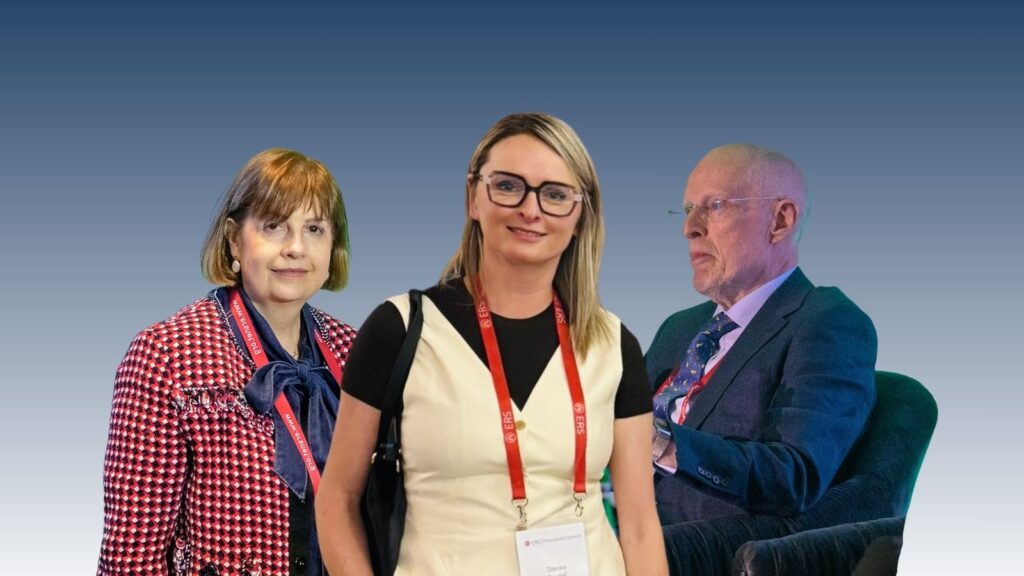
Patient representatives joined clinicians, researchers and policymakers at the ERS Presidential Summit in Warsaw last month, bringing lived experience to discussions on early detection, artificial intelligence, air quality and the future of lung health. We asked three attendees to share their reflections.
Natalia Maeva is a lung transplant recipient and Chair of the Bulgarian Society of Patients with Pulmonary Hypertension (BSPPH). She also serves on the ELF Council coordinating ELF’s working groups and is part of ELF’s United Patient Advisory Group (UPAG), which brings together PAG representatives to share ideas, support one another and guide the ELF strategy across lung conditions.
What sessions or discussions did you attend?
I attended sessions on early detection, air quality, tobacco control, climate change and lung health. As someone whose life was transformed by access to specialised treatment and lung transplant, I found the discussions on early detection particularly meaningful. Detecting respiratory diseases earlier can change the course of a patient’s life and improve outcomes long before the disease reaches an advanced stage.
I was also inspired by the discussions about the future of the Healthy Lungs for Life campaign. Knowing that Sofia, Bulgaria, will host one of the upcoming events makes me optimistic that these important messages will reach more people in my own country.
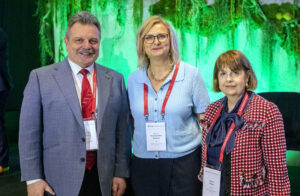
Bulgarian MP Dr Alexander Simidchiev with ERS President Prof. Joanna Chorostowska-Wynimko and BSPPH Chair Natalia Maeva at ERS Presidential Summit, Warsaw, June 2026 (from left to right)
What did you find most valuable about attending the Summit?
What impressed me most was the genuine willingness to listen. Scientists, clinicians, policymakers and patients were not speaking in separate conversations – we were learning from one another. As someone living with pulmonary hypertension, it was encouraging to feel that my experience was valued alongside scientific expertise.
The discussions on AI were also positive, highlighting that it should support healthcare professionals, not replace the human connection patients need.
What were your key takeaways?
Early detection saves lives, but only if healthcare systems are designed around people as well as technology. Scientific innovation, prevention and lived experience all have an essential role to play.
The Summit demonstrated that patient-professional partnership is no longer simply an aspiration – it is becoming the way we work. Patients contribute expertise that no textbook can provide: the experience of living with disease every day.
Phil Taverner is a long-standing patient advocate, living with asthma since childhood and more recently diagnosed with bronchiectasis. The incoming ELF Chair for the 2026–2029 term, Phil attended the ERS Presidential Summit, where he contributed to discussions on the value of screening for lung health.
What stood out most from the Summit?
It was great to see patients involved in all the sessions and mixing with clinicians and scientists in a joint search for improved services and treatments for respiratory conditions. What struck me most was the opportunity for patients, healthcare professionals and researchers to come together and learn from one another.
What was your key takeaway from the discussions?
I thought most deeply about the session I was involved in. It brought home to me again the lost opportunities of not including respiratory health in routine health checks. If the reason is financial, it’s a false economy as chances to detect problems at an early stage are missed.
Were there any topics that particularly interested you?
The question of the time it can take to get treatments through the regulatory process is not an easy one, and patients are as likely as professionals to have subtly different views depending on their stage of life and other factors. I also found the discussions around AI interesting. The key point for me was not to let it dull our critical thinking or our ability to make informed decisions.
Zdenka Bradač represents the ELF Pulmonary Hypertension Patient Advisory Group (PAG). She is President of PHA Europe and President of the Croatian patient association Plava krila (Blue Wings).
What was your experience of the Summit?
The Summit was an excellent experience and a real privilege to attend as a patient representative. What I value most is the opportunity for patients to meet healthcare professionals outside the usual clinical environment and exchange ideas in a more open and relaxed way. These conversations help build mutual understanding and create genuine partnerships.
What were your key takeaways?
Patient involvement is essential. By including patients in discussions, healthcare professionals gain a better understanding of how we experience our condition, how we perceive diagnosis and what new treatments mean in everyday life. Patients bring a unique perspective that complements scientific and clinical expertise.
I was also proud to see Croatia’s national lung cancer screening programme recognised as an example of good practice. Although Croatia is a relatively small country, it shows that innovative and effective healthcare programmes can serve as inspiration for other countries across Europe.
How does attending the Summit support your work as a patient representative?
Participating in the Summit strengthens my work as a patient advocate by allowing me to bring the patient voice directly into discussions that shape the future of respiratory care. It also helps me take new knowledge and best practices back to the pulmonary hypertension community and continue promoting collaboration between patients and healthcare professionals.
Also attending the Summit as patient representatives were Helen Parks, the current United Patient Advisory Group (UPAG) representative, Dimitris Kontopidis, current ELF Chair, and Stefan Radut, a tuberculosis survivor and patient advocate. Together, they helped ensure that patient perspectives were represented throughout discussions on the future of lung health.
Our Patient Advisory Groups or PAGs are made up of people who have an interest in a particular lung condition or topic related to lung health. Members share their views and get involved in projects to help improve treatment and healthcare. If you are interested in joining a PAG or would like further information, please get in touch at info@europeanlung.org.
If you are interested in getting involved with patient involvement and advocacy, you can sign up to our free, online, self-learning programme, the European Patient Ambassador Programme (EPAP). EPAP introduces patients and carers to some of the basic skills and knowledge needed to represent yourself and others successfully.