The Barcelona programme is being delivered through a partnership between the European Lung Foundation, the European Respiratory Society and local Spanish organisations, ensuring strong local leadership and community engagement.
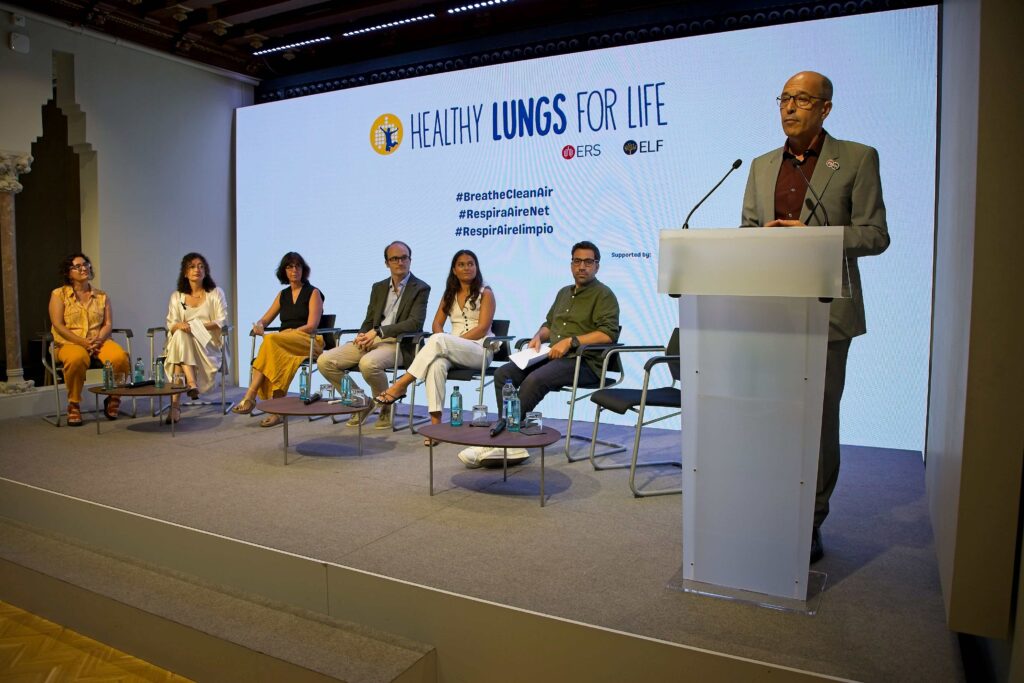
Attendees included Mr Jordi Remírez, Director of Energy and Environmental Quality at Barcelona City Council.
The meeting united key partners including Barcelona Institute for Global Health (ISGlobal), Vall d’Hebron University Hospital, Barcelona Convention Bureau, University Hospital Arnau de Vilanova de Lleida, Hospital Clínic de Barcelona, Asthma and Allergy Spain, Separ Respira, Lovexair Foundation, Fenaer Pacientes and APEPOC to focus on clean air and its importance for lung health. The meeting was held at La Caixa Foundation.
The meeting showcased new research from Dr Pedro Vidau and Dr Rocío Martín Galán from Hospital Universitario Río Hortega in Valladolid, presented at the ERS Congress 2026 in Barcelona (5–9 September).
The research demonstrated that increases in nitrogen dioxide (NO₂), a pollutant largely produced by road traffic, were associated with increases in asthma-related emergency hospital visits among adults aged 50 and under within just three days of exposure. The team also presented evidence that air pollution and atmospheric effects significantly contributed to COPD exacerbations.
Speakers also included President of Asthma and Allergy Spain Raquel Gómez, who discussed the impact of air quality on lung disease in Barcelona, ERS Congress Co-Chair Rosa Faner, who stressed the importance of clean air in childhood, and Deputy Director from the Barcelona Institute for Global Health (ISGlobal) Judith García-Aymerich, who emphasised the need to make clean air a public health priority.
The meeting provided an opportunity for all organisations to share messaging on the importance of clean air. The launch of Healthy Lungs for Life in Barcelona came at an important moment for Spain’s ongoing efforts to improve air quality and public health. Lung disease affects approximately 8.6 million people in Spain, with more than 77,700 deaths each year.*
Healthy Lungs for Life is supported by a Clean Air Fund grant, which aims to help cities reduce air pollution to meet European air quality standards. These standards set safe limits for harmful pollutants. Meeting them means cleaner air for everyone, fewer breathing problems and better lung health for current and future generations.
By connecting communities with healthcare professionals and researchers, the campaign aims to increase understanding of the link between clean air and healthy lungs, inspire practical action and create a lasting legacy that benefits current and future generations across Barcelona and beyond.
Dr Marc Miravitlles, ERS President Elect and Senior Researcher and Consultant at Vall d’Hebron University Hospital, Barcelona, said: “Clean air is essential for healthy lungs. Healthy Lungs for Life public events demonstrate the importance of bringing respiratory health checks to the local population and raising awareness in local communities of good lung health.
“By bringing both health checks and respiratory science to the community in Barcelona, Healthy Lungs for Life supports lasting action that protects respiratory health across Spain and throughout Europe.”
Raquel Gómez, President of Asthma and Allergy Spain, said: “As the mother of a daughter living with severe uncontrolled asthma, I know that air quality can make the difference between a normal day and a medical emergency.
“More than 2.5 million people in Spain live with asthma, including over 10% of school-age children. We cannot change a child’s diagnosis, but we can reduce one of the factors that makes asthma worse. Cleaner air means fewer asthma attacks, fewer emergency visits and a better quality of life for millions of people and their families.”
In just two days, Healthy Lungs for Life will deliver public-facing activities, including a free lung health event at Plaça de la Universitat on 6 September 2026. Visitors will be offered free lung function testing and practical advice on reducing risks from air pollution, smoking and other factors that affect lung health.
The campaign is also working with schools across Barcelona to help children and young people learn how to protect their lungs from an early age through interactive sessions on air quality, physical activity and healthy lifestyles.
*Data taken from the International Respiratory Society’s Lung Facts project.
Air pollution
If you want to learn more about outdoor air pollution, including its effect on your health and what you can do to reduce your exposure, explore ELF’s free resource.
Healthy Lungs for Life
Learn more about the Healthy Lungs for Life campaign in Spain
Learn more about the HLFL campaign across Europe
Abstracts